
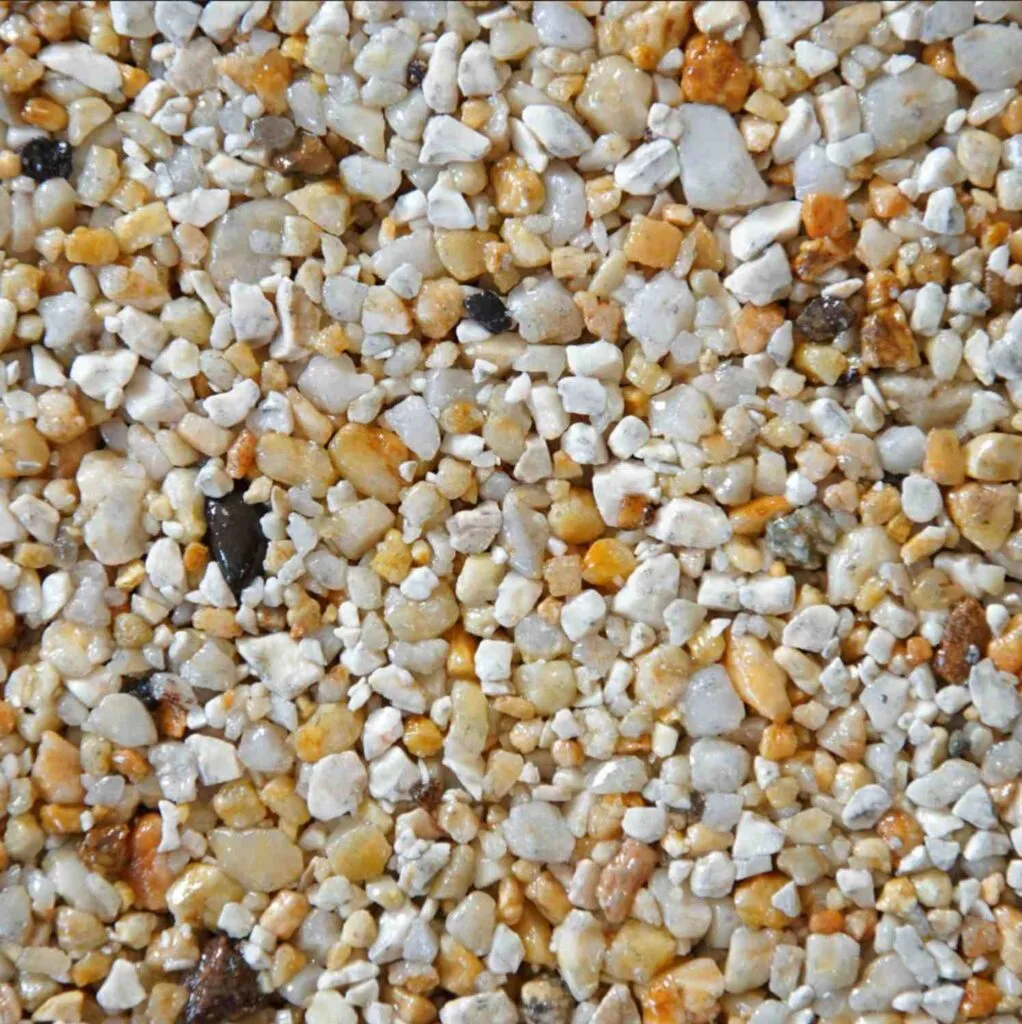
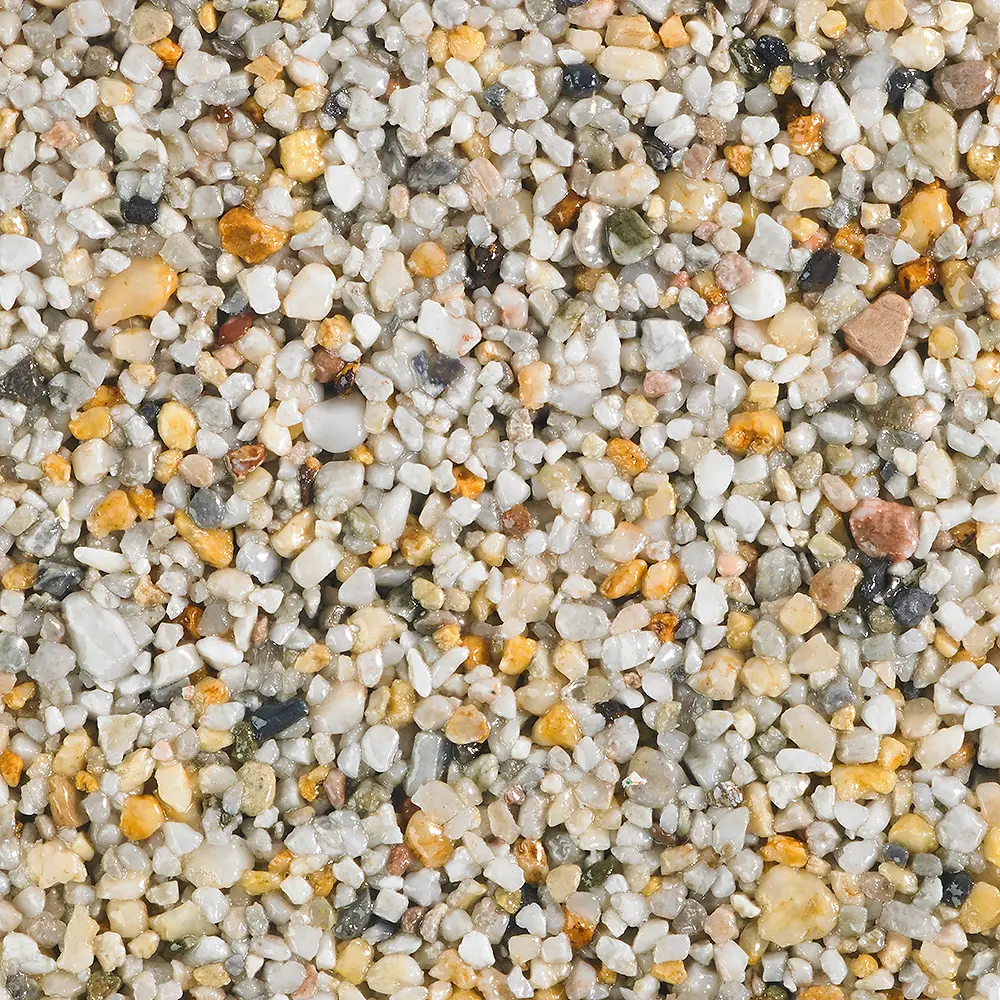
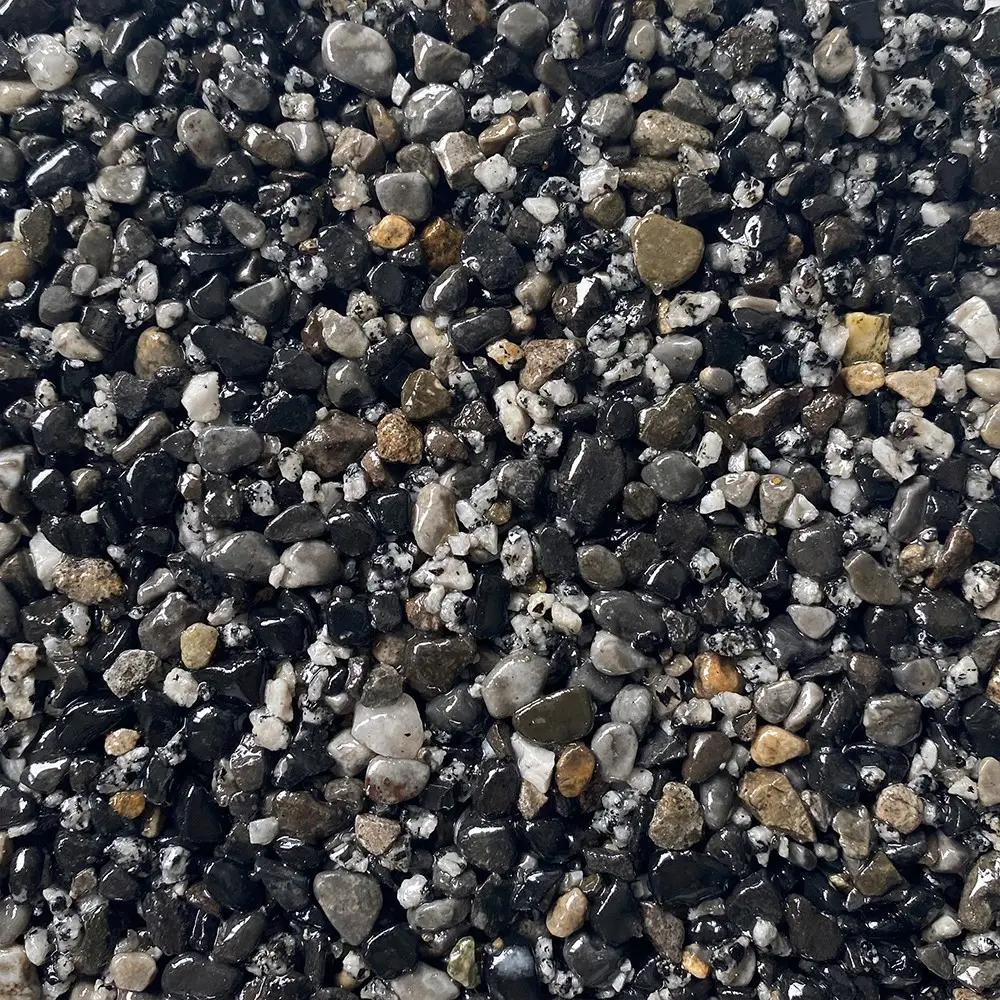
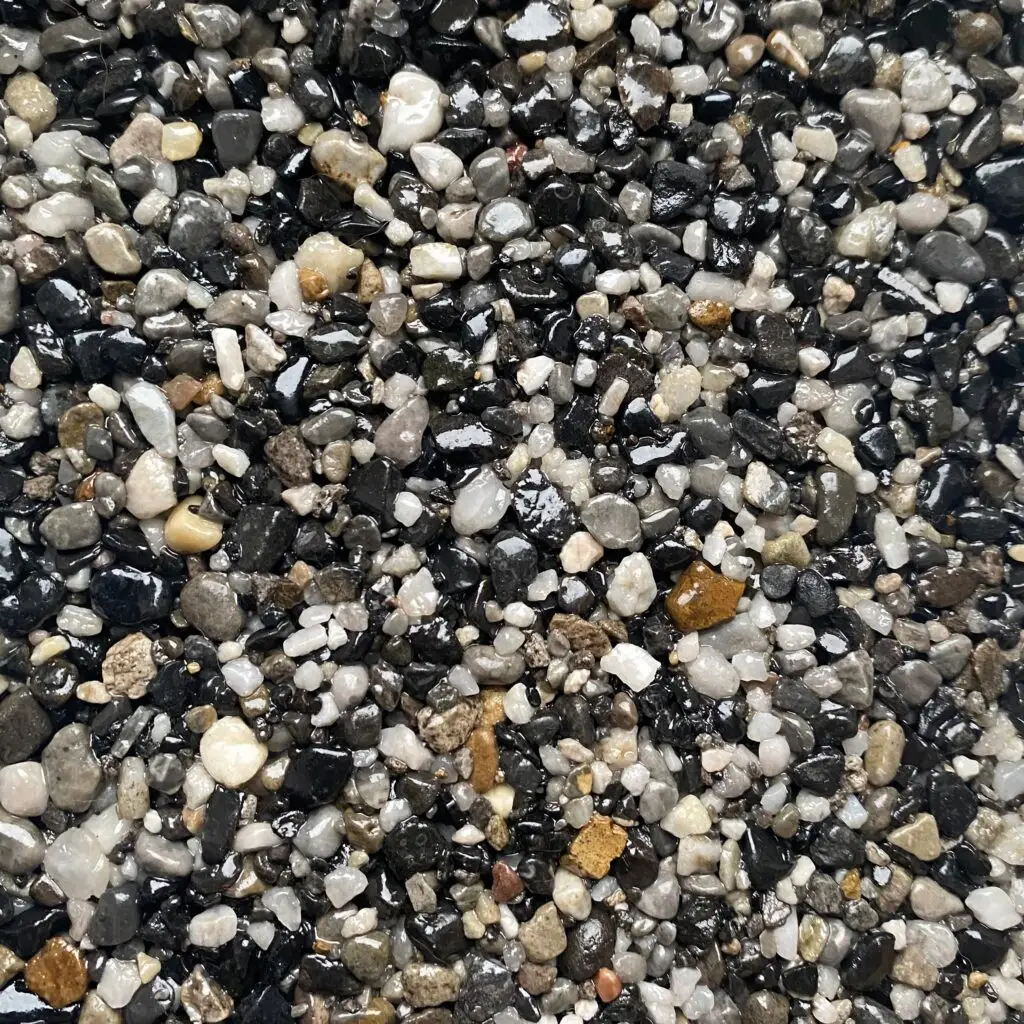


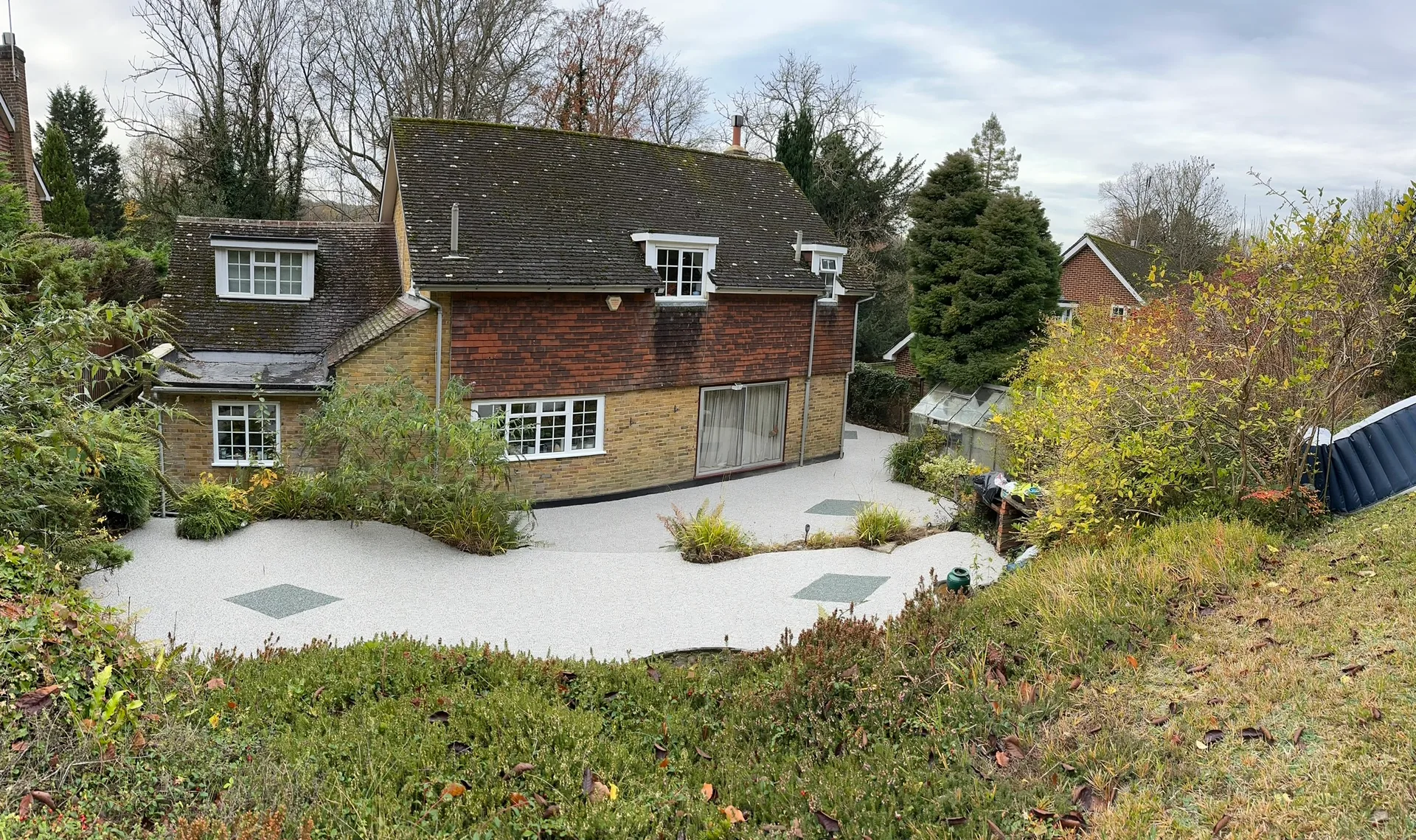


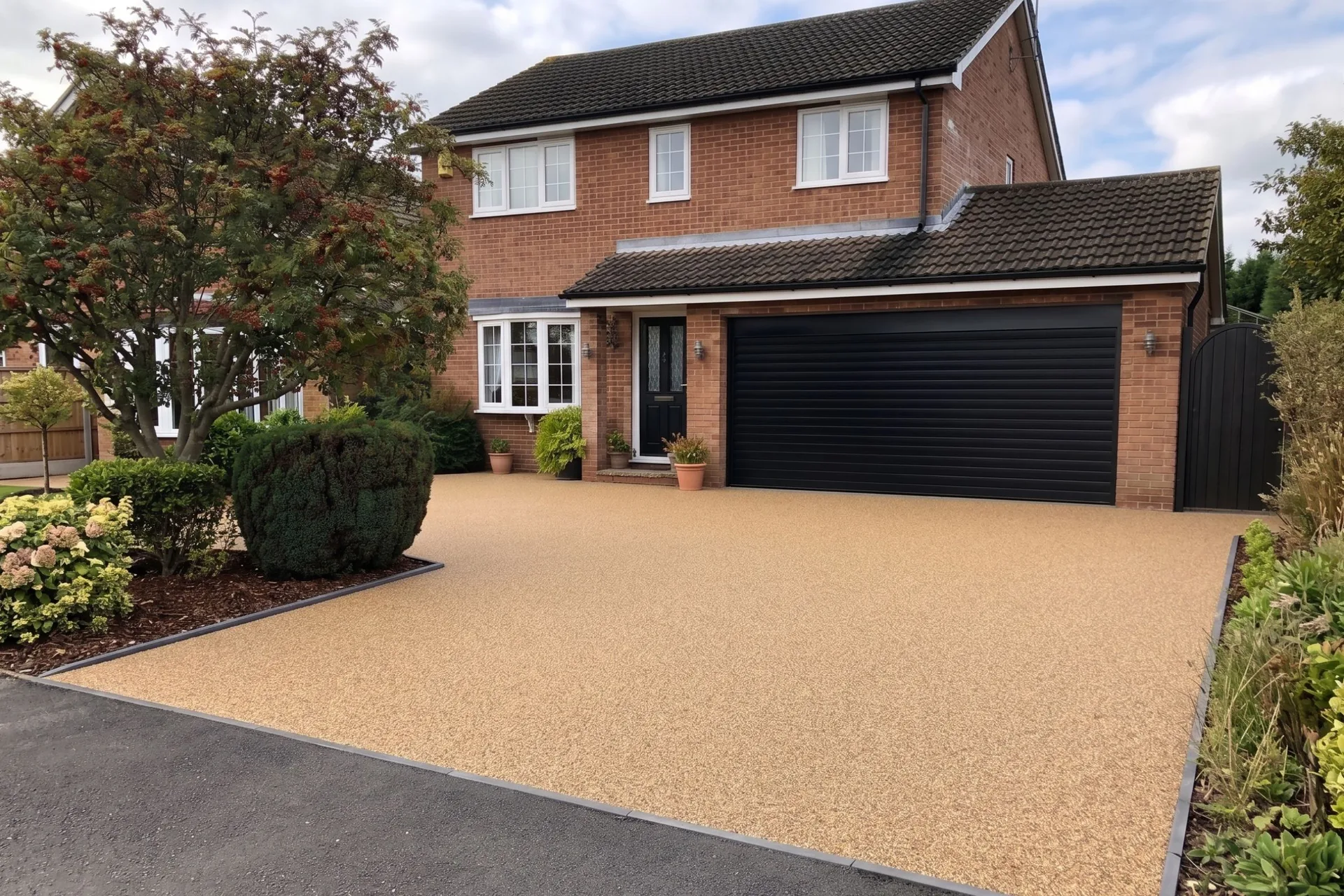
Cleaning a resin bound driveway is a ten minute job: sweep with a stiff brush, wash down with a hose, done. No re-sanding, no weed killing between joints, no annual sealing. Low maintenance is half the reason the surface exists. The only ways to get it wrong involve trying too hard — with turbo pressure nozzles, wire brushes or aggressive chemicals — all of which can damage a surface that wanted nothing more than a rinse.
Here is the full routine, the stain-by-stain treatments, and the short list of things to keep away from it.
The routine: a few times a year
- Sweep. Stiff bristled brush, get leaves, grit and debris off the surface. Organic litter left sitting in damp corners is what feeds moss, so this one step prevents most of the problems further down this page.
- Hose down. An ordinary garden hose shifts dust, pollen and surface dirt. The drive drains through itself, so there is no pushing puddles around.
- Spot wash where needed. Warm water, a squirt of mild detergent like washing up liquid, brush, rinse.
That is the whole maintenance schedule. Spring after the pollen and autumn after the leaves are the two sessions that matter most.
Pressure washing: fine, with three rules
A pressure washer is safe on resin bound when used like a cleaning tool rather than a cutting tool.
- Fan nozzle only. Never the rotating turbo or pencil-jet nozzle, which concentrate enough force to dislodge stone.
- Distance and movement. Keep the nozzle 20 to 30cm off the surface and keep it sweeping. Holding the jet on one spot — especially on edges or any existing damage — is how stones get blasted loose.
- Moderate pressure. Domestic machines around 100 to 150 bar are plenty. Industrial machines on full power are unnecessary and risky.
If the surface is shedding stone under sensible pressure washing, the washing is not the problem; the installation was — and our problems guide covers what that means.
Stain treatments that actually work
| Stain | Treatment |
|---|---|
| Oil and diesel | Blot fresh spills, never rub. Warm water and degreasing detergent, brush, rinse well. Repeat for older stains with a dedicated driveway degreaser |
| Tyre marks and scuffs | Warm soapy water and a stiff brush. Most fade with weathering anyway |
| Moss and algae | Brush off, wash, then a moss remover labelled safe for resin or sealed surfaces. Re-treat shaded corners each spring |
| Leaf and berry stains | Usually weather out. Stubborn tannin marks lift with diluted detergent and patience |
| Chewing gum | Freeze with an ice pack or freeze spray, chip off carefully with a plastic scraper |
| Rust marks | A rust remover suitable for stone surfaces, tested on an edge first. Avoid acid-based patio cleaners |
| Paint or cement splashes | Lift while wet if possible. Cured spots need careful mechanical removal with plastic tools — never solvents |
Test anything stronger than detergent on a hidden edge first. Five minutes of testing beats a bleached patch in the middle of the drive.
What never to use
- Wire brushes and metal scrapers. They scour resin off the stone and leave visible scratching.
- Turbo and pencil pressure nozzles. Stone removal tools, as far as this surface is concerned.
- Neat bleach, strong acids, caustic patio cleaners. They attack the resin binder and can bleach the aggregate. Heavily diluted household products are survivable for spot treatment but there is almost always a gentler product that does the same job.
- Petrol, white spirit and solvent cleaners. Solvents soften resin. Keep them, and fuel spills generally, off the drive.
- Heavy rock salt in winter. Occasional light gritting before ice is fine; repeated heavy salting accelerates surface wear.
Two habits that keep it looking new
Put a drip tray under anything that leaks — classic cars and old motorbikes especially — because prevention beats every degreaser made. And spread point loads (car jacks, skip feet, ladder feet) on a board, particularly in summer heat when any resin surface is at its softest.
If cleaning is not fixing it
A mark that survives everything above, stone coming loose during gentle washing, or patches changing colour are surface condition questions rather than cleaning questions. Send photos over WhatsApp and we will tell you what you are looking at and whether it is repairable — no charge for the opinion.
And if you are reading this while weighing up a new drive: this page is the entire maintenance manual. Compare it with a weekend of re-sanding block paving joints, then get an instant guide price below or book a free site visit. Call now for a quote.
Related guides: Resin driveway problems · Resin driveway cost in London · Resin bound driveways

.jpg)