



Choosing a resin colour comes down to one rule: pick up a tone that already exists on your property, then test it in your own light before committing. The drive is the largest surface a visitor sees, it sits directly against your brick or render, and it will be there for 15 to 25 years. Get the undertone right and everything looks intentional. Get it wrong — a pink-leaning buff against orange London brick, a blue grey against cream render — and the clash greets you daily.
We carry 59 aggregate blends across warm naturals, cool greys, blues, whites, earthy tones, pinks and statement mixes, so this guide is about narrowing fast rather than scrolling endlessly.
Start with what the drive sits next to
The house decides, not the catalogue. Walk outside and note the three dominant tones: the brick or render, the window and door joinery, and the roof. Your shortlist should harmonise with the first, and can pick up the second as a border or accent.
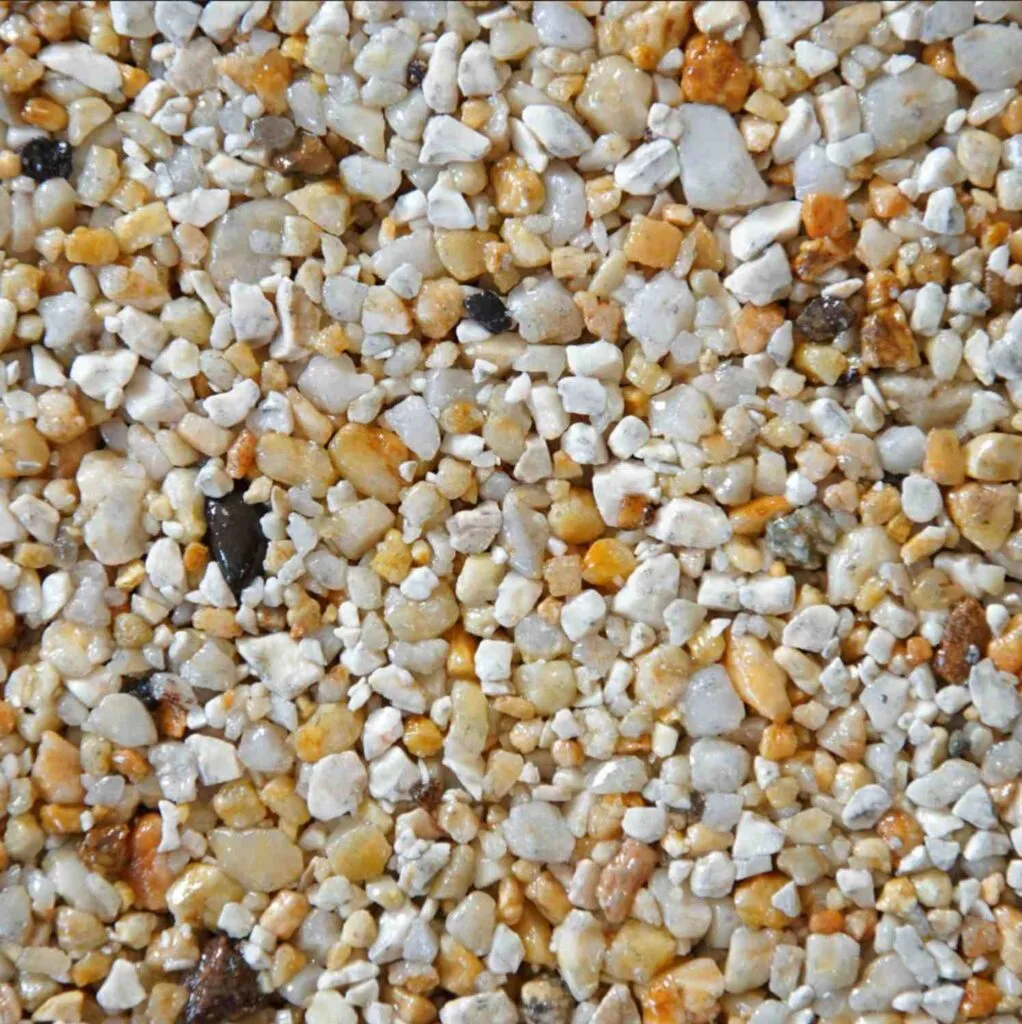
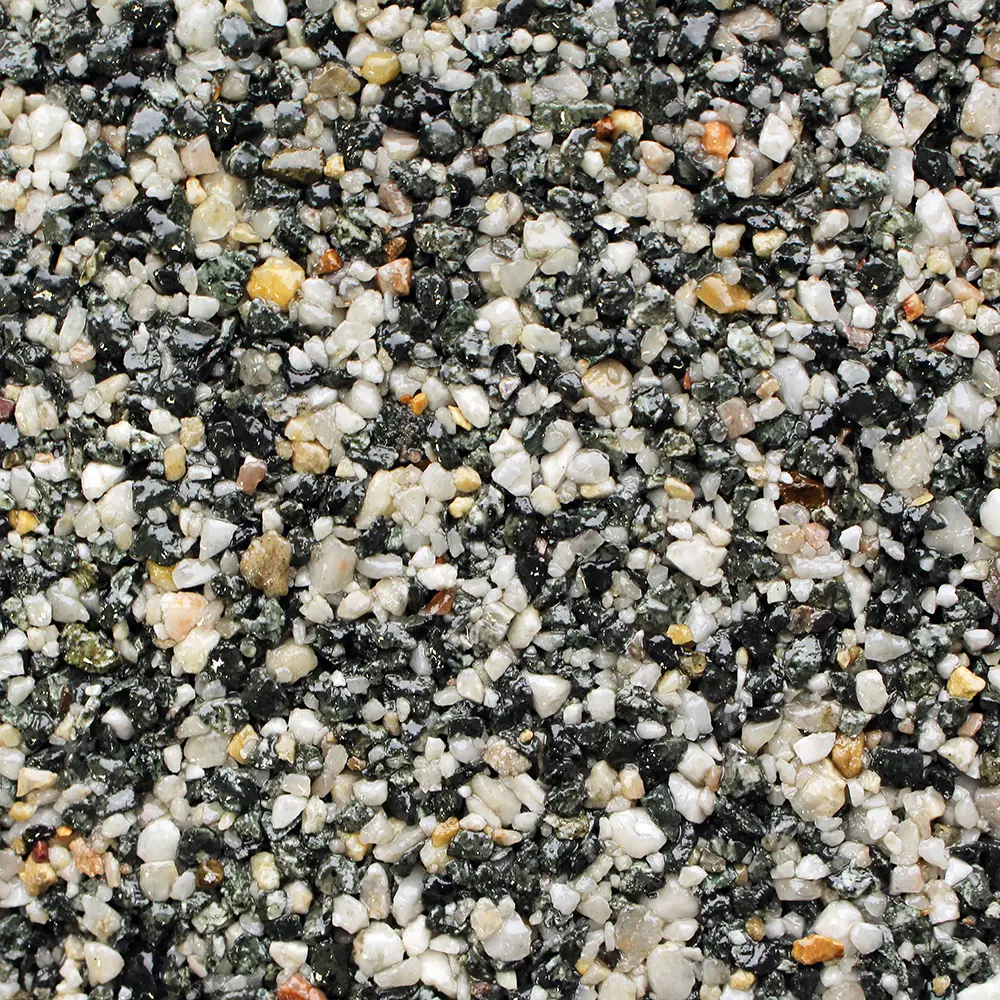
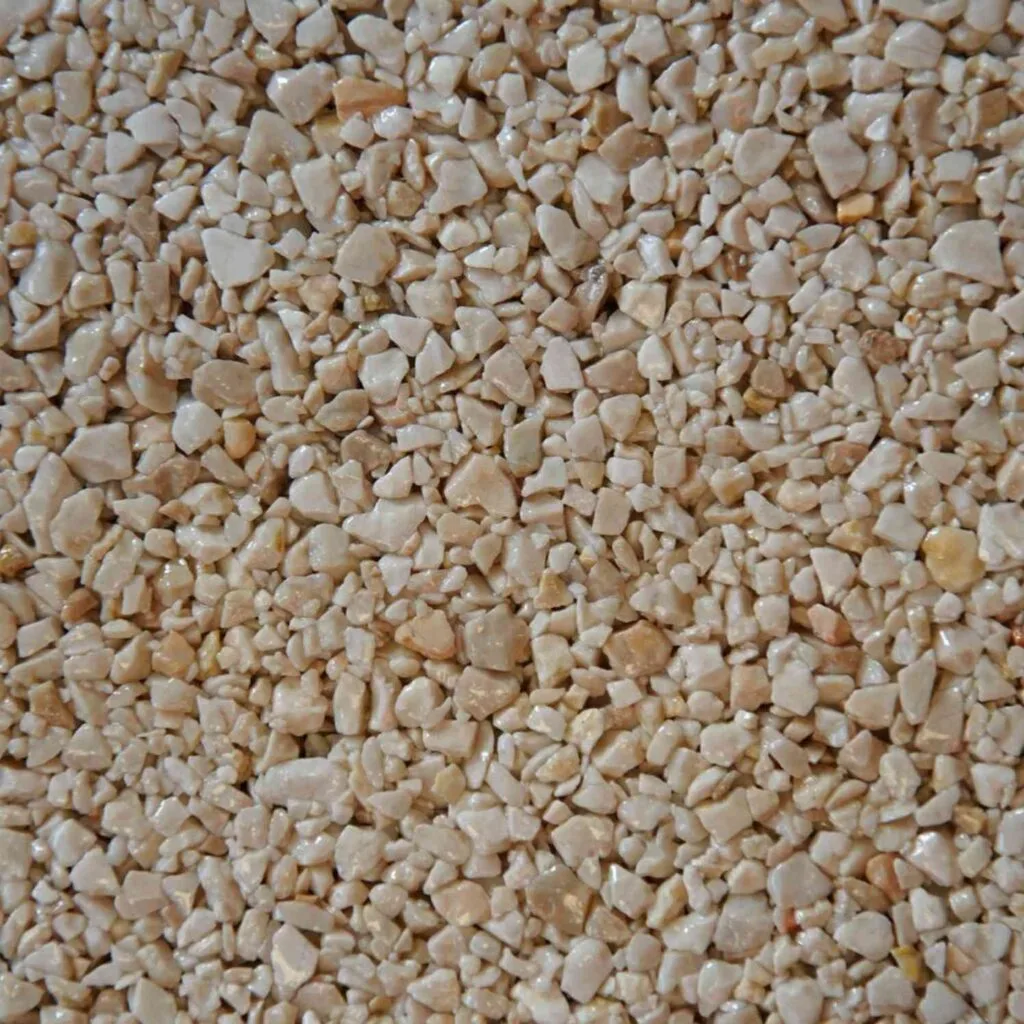
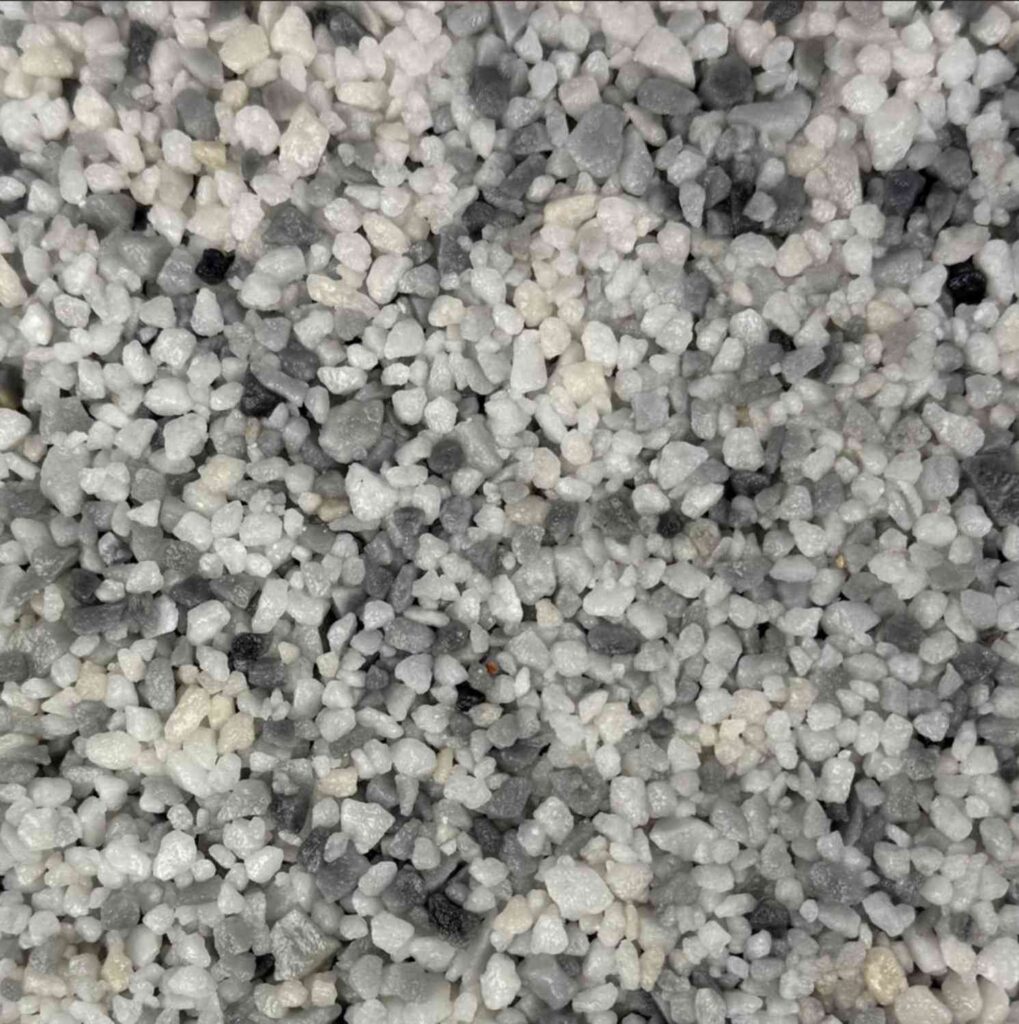
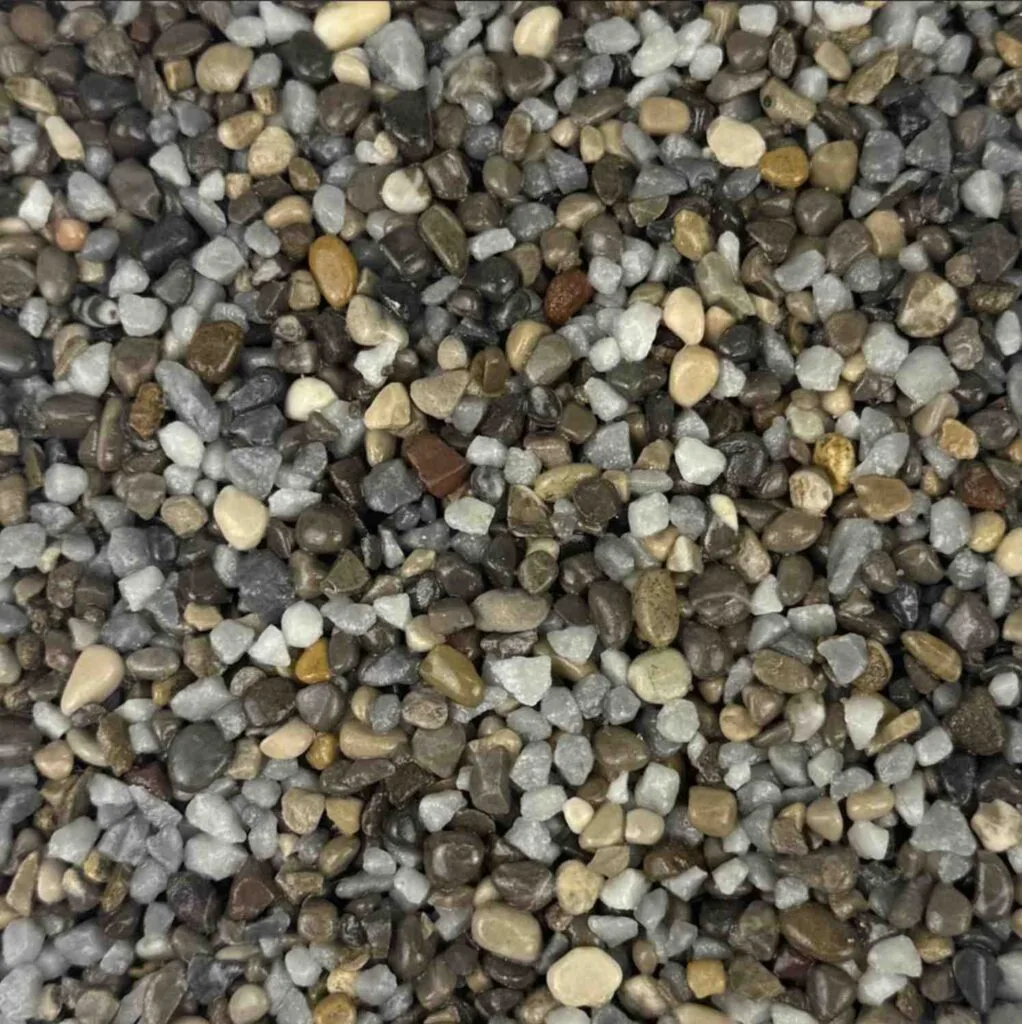
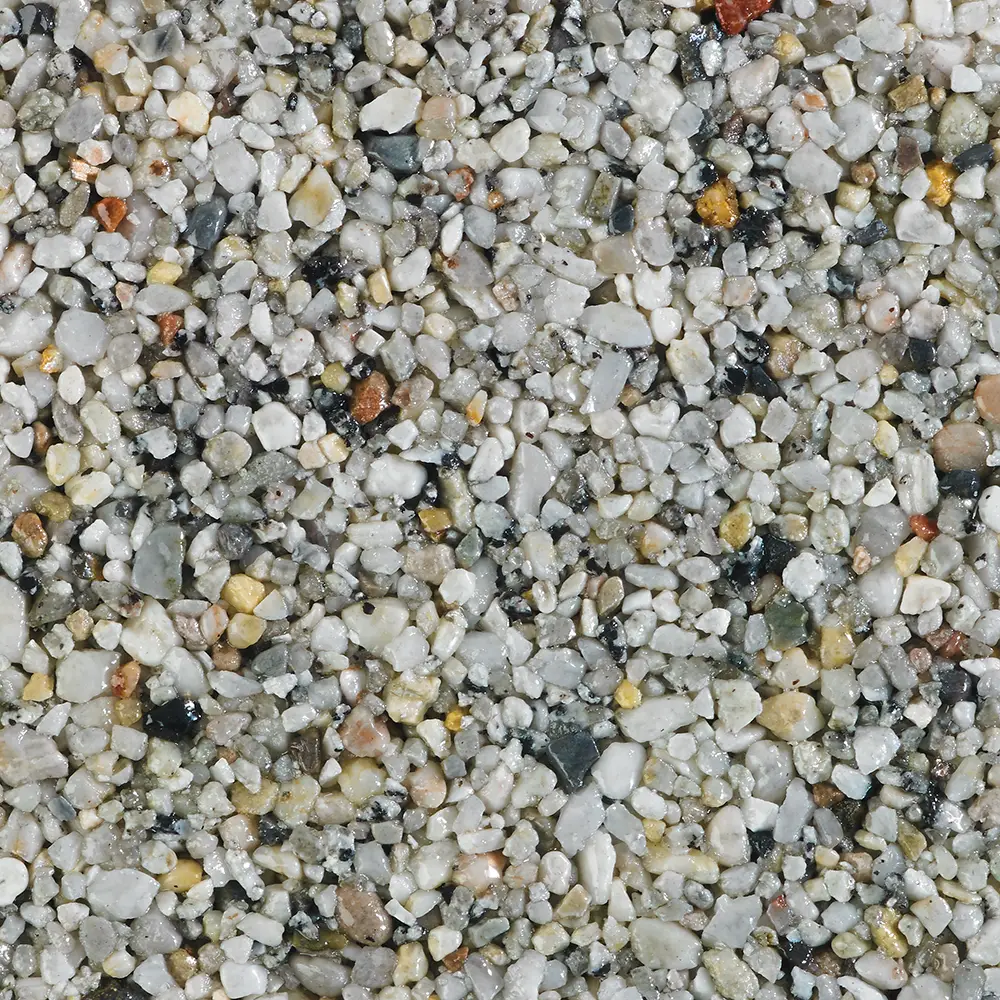
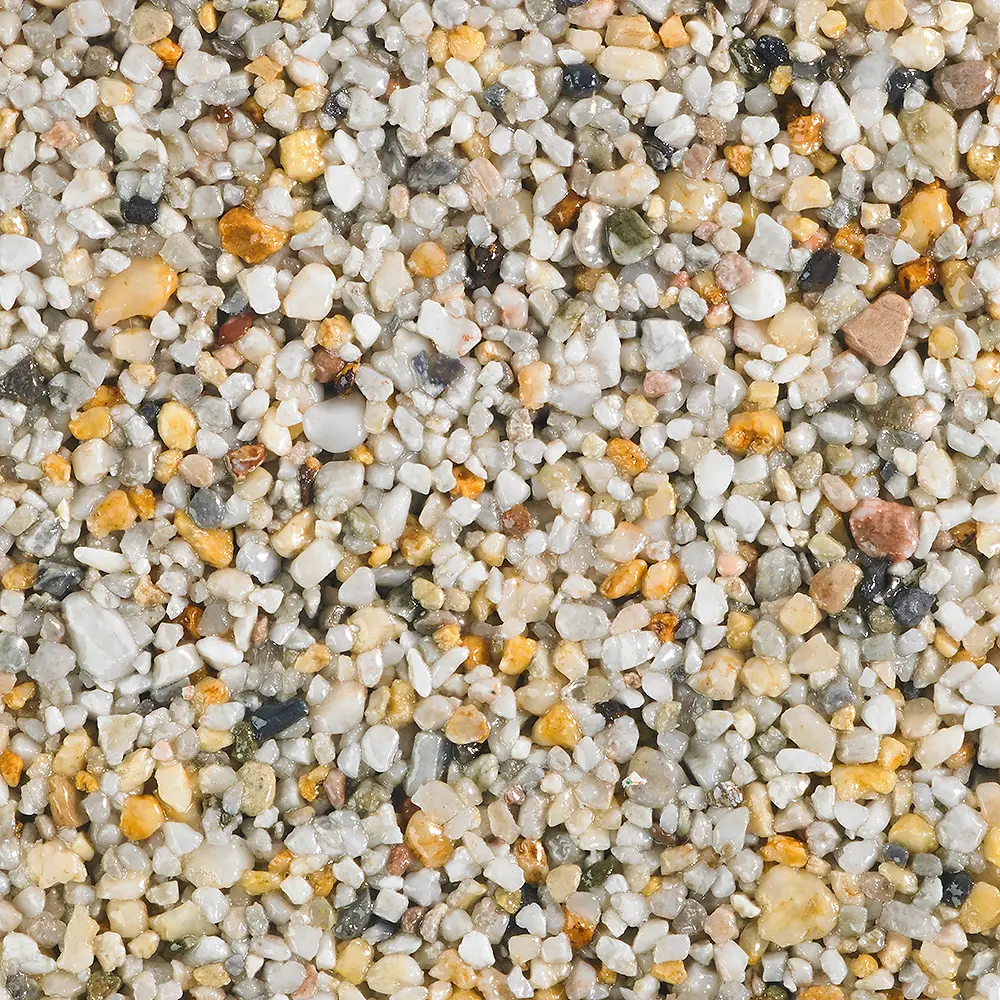
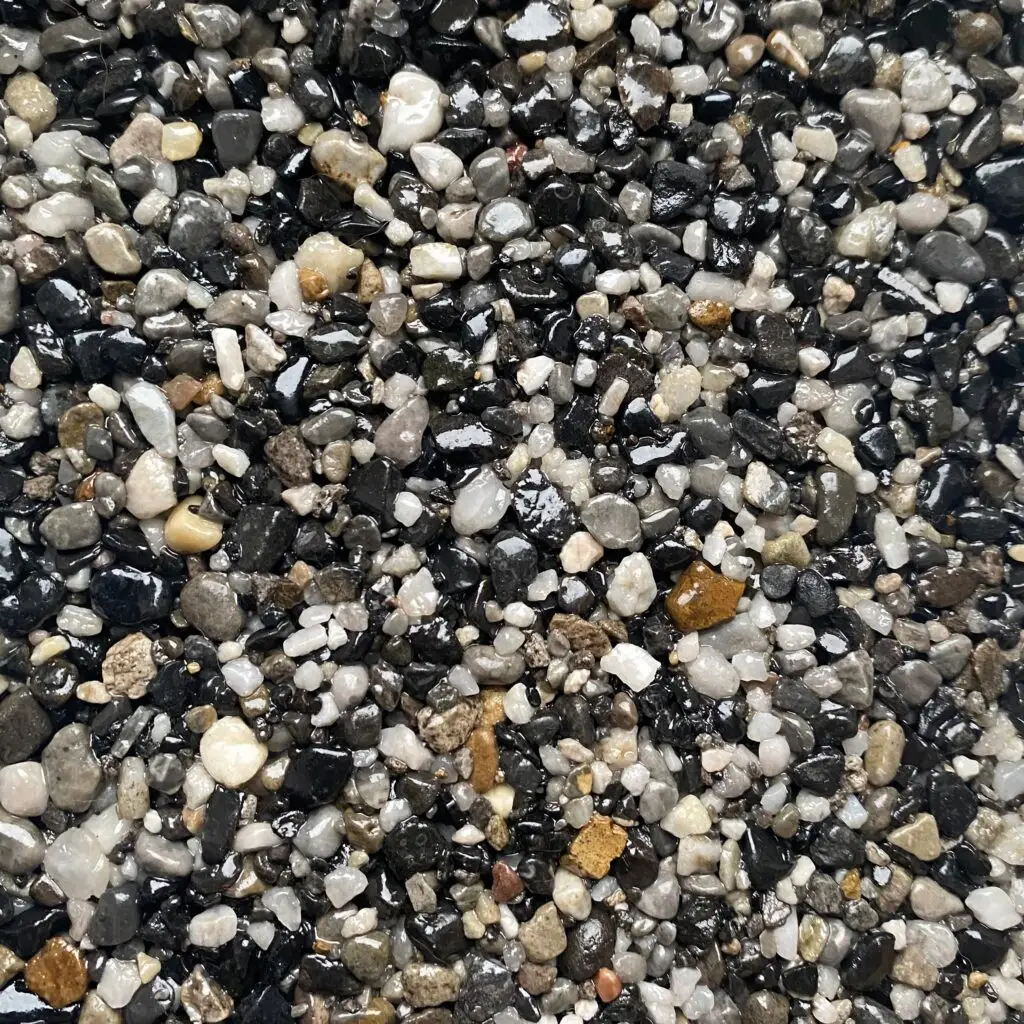
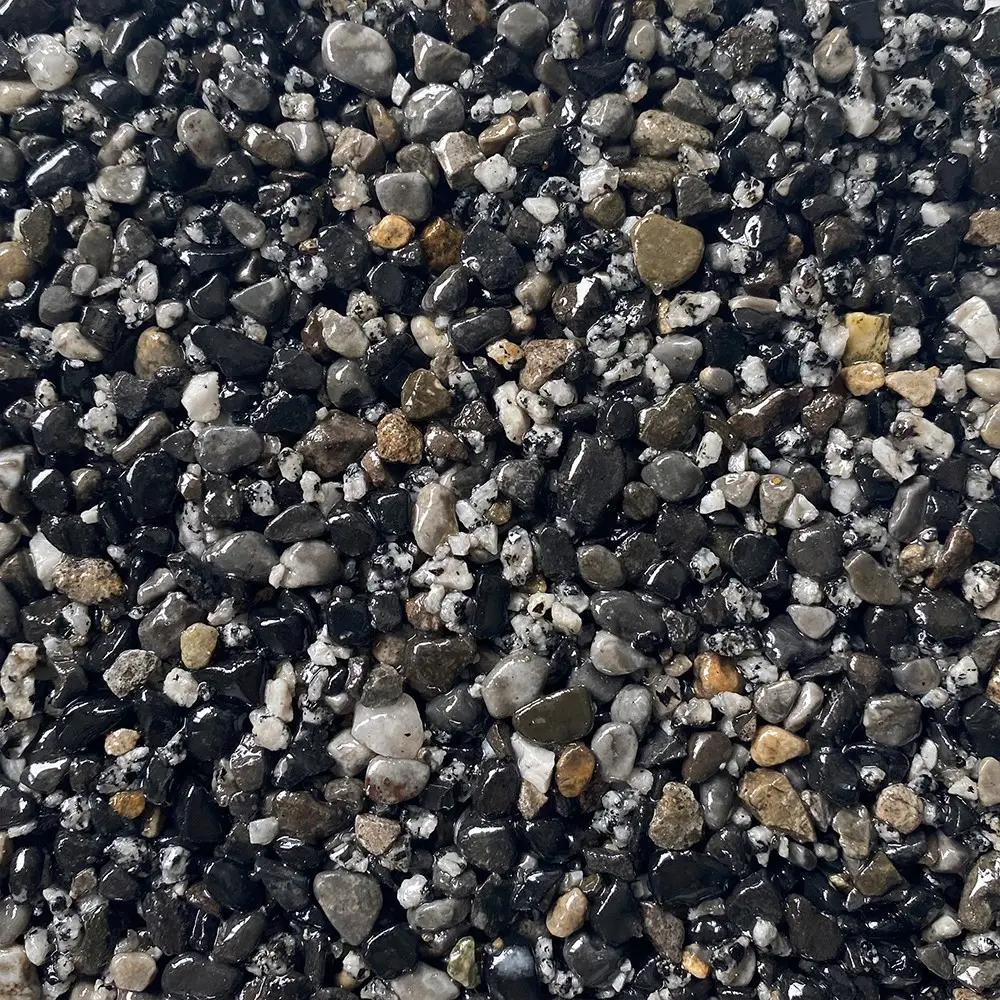
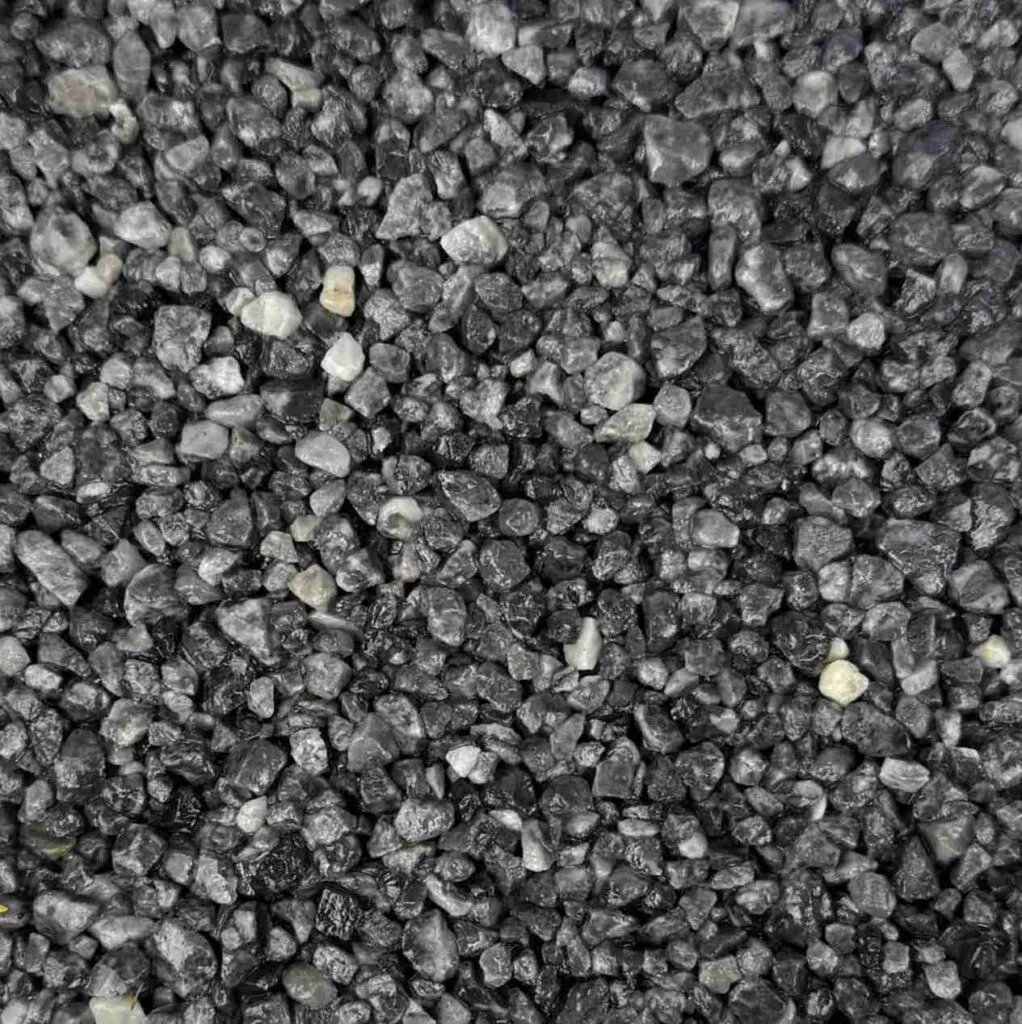
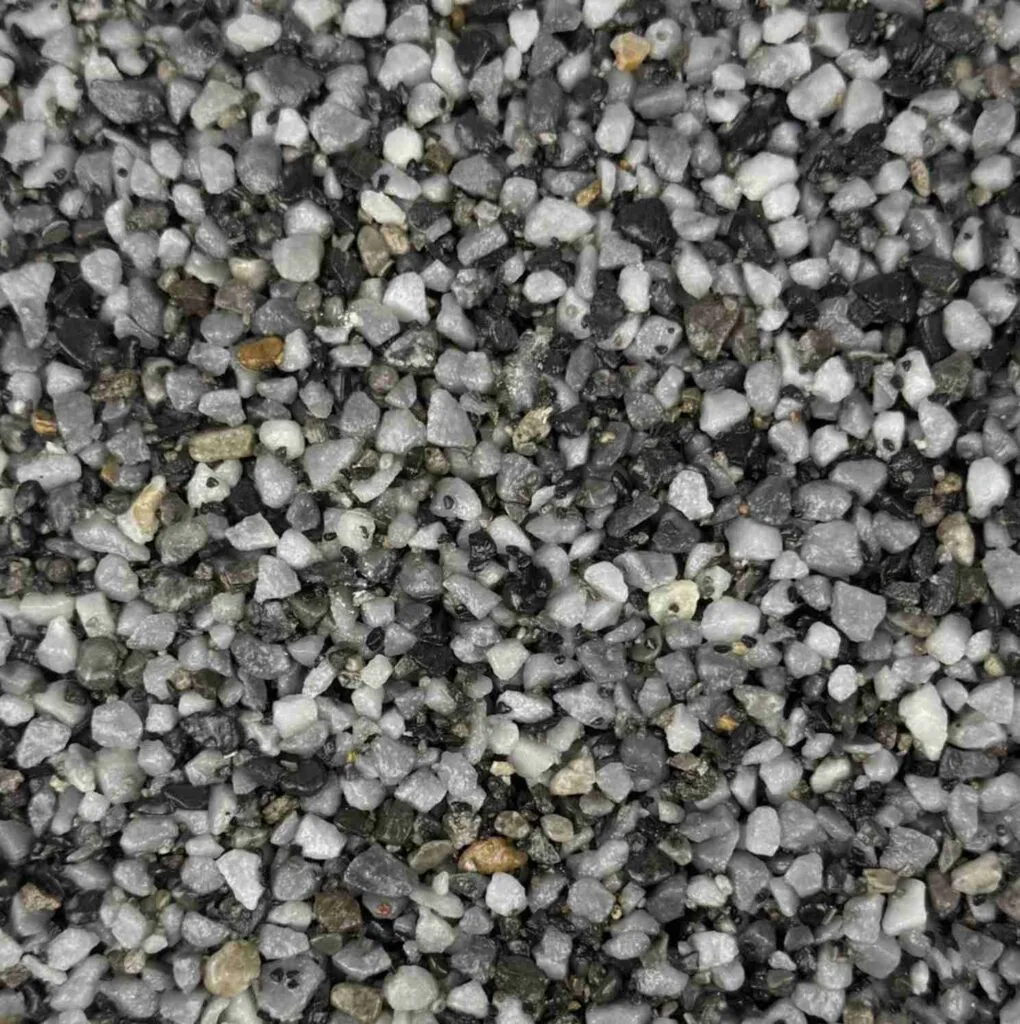
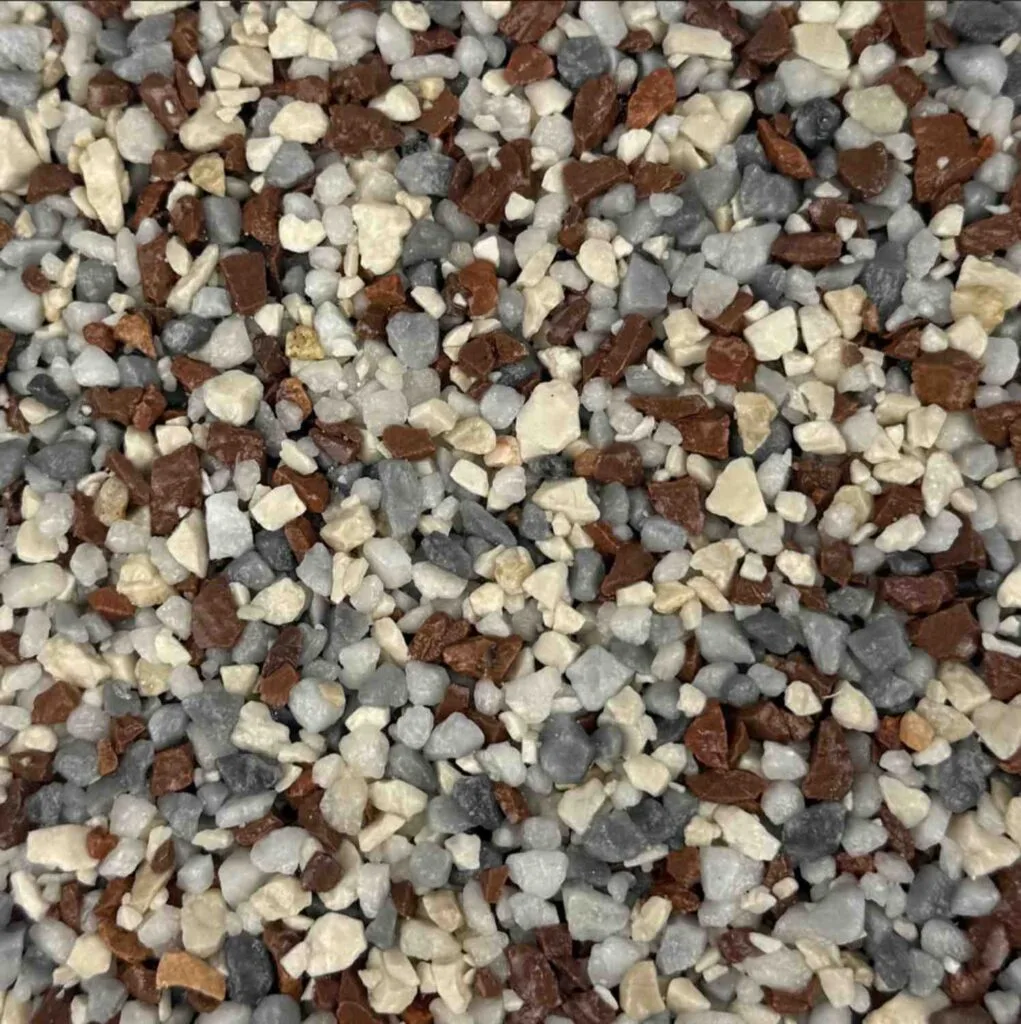
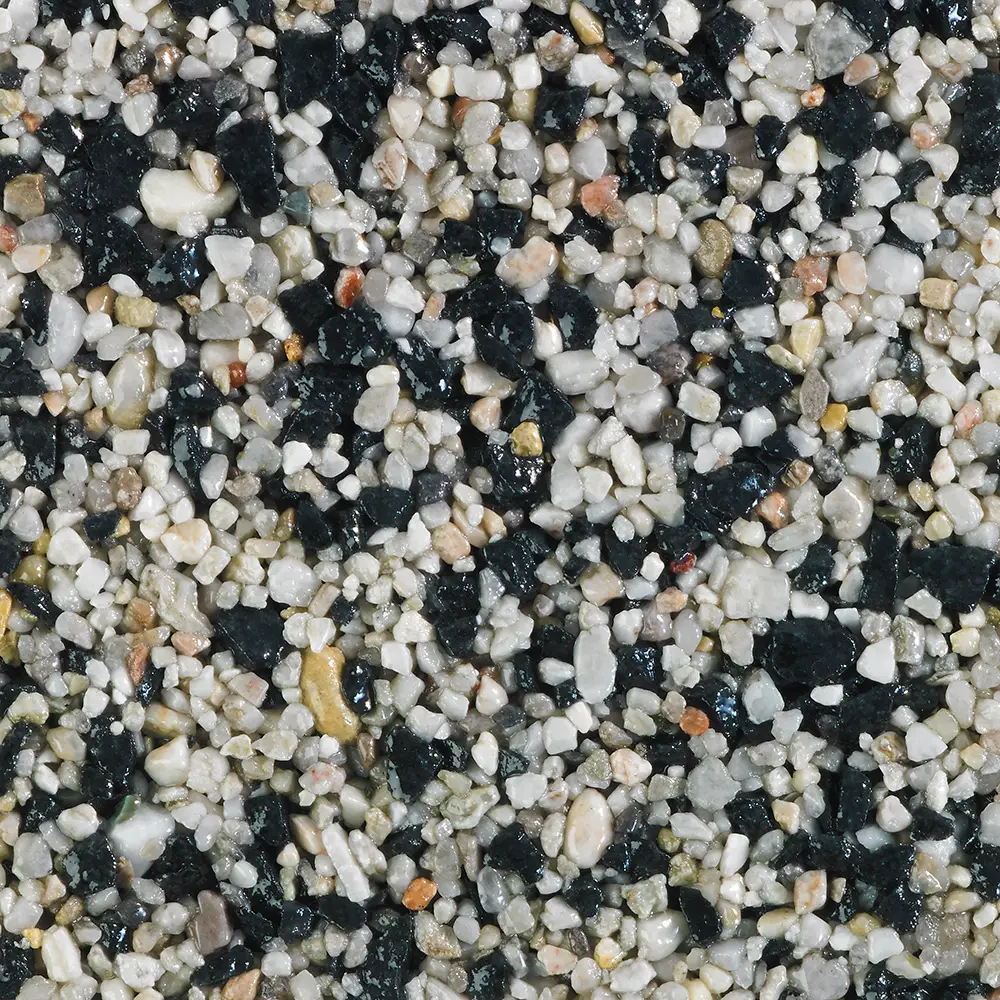
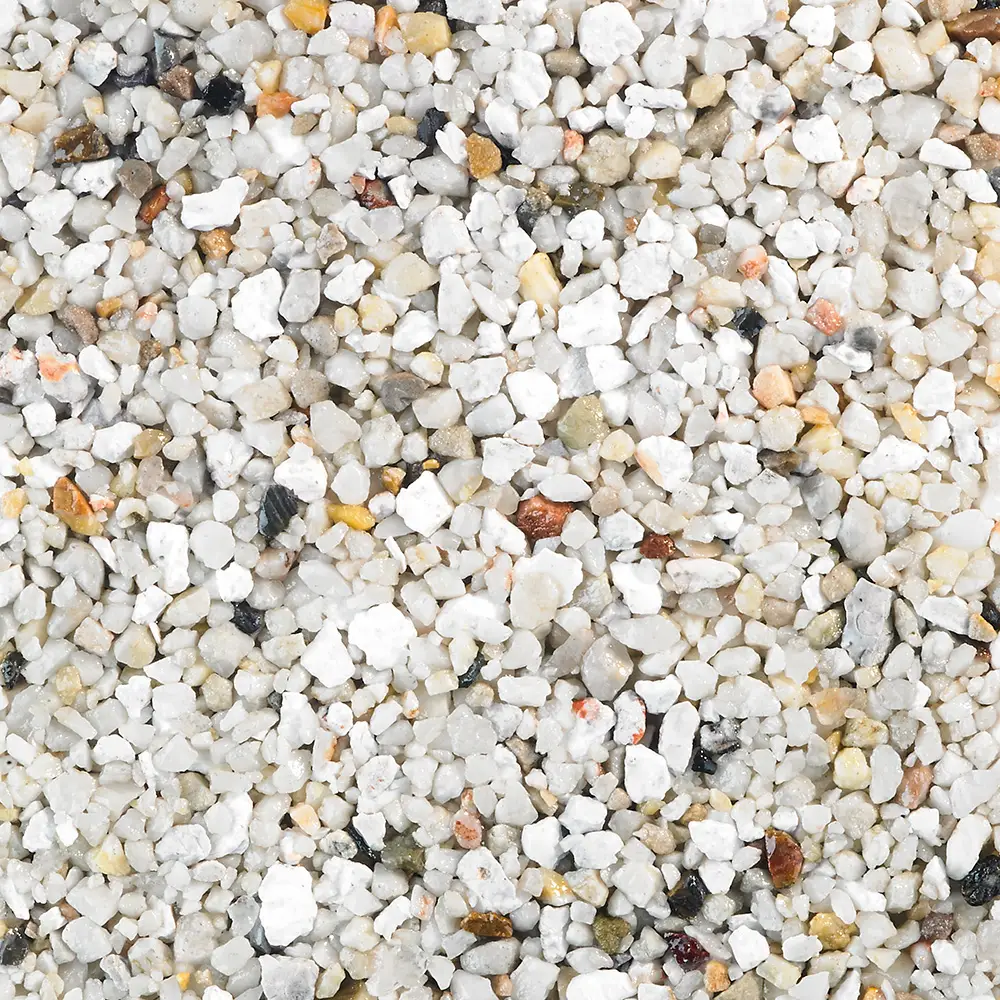
The full range with photography of every blend is on our colour library, grouped by family so you can shortlist in minutes.
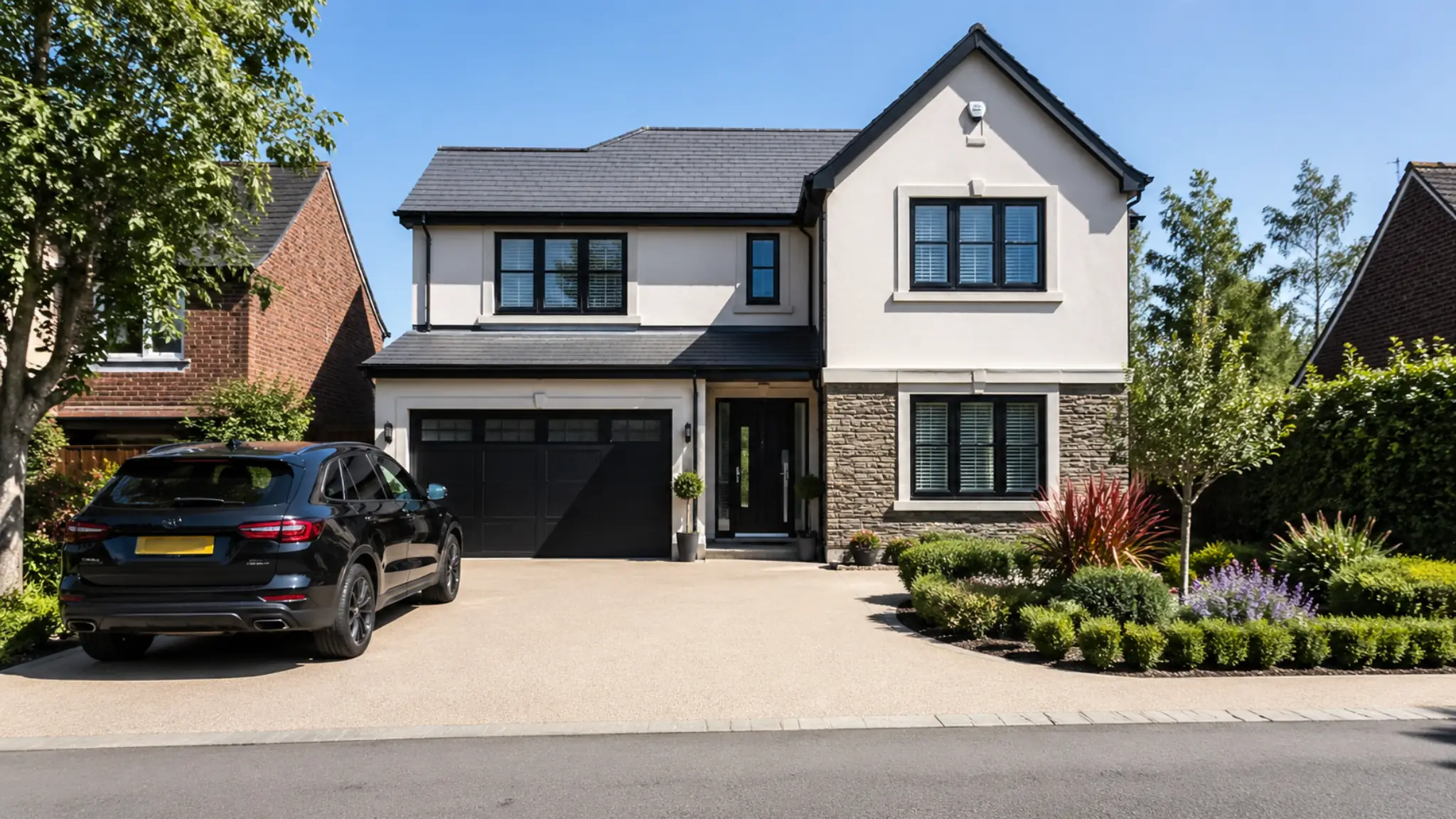
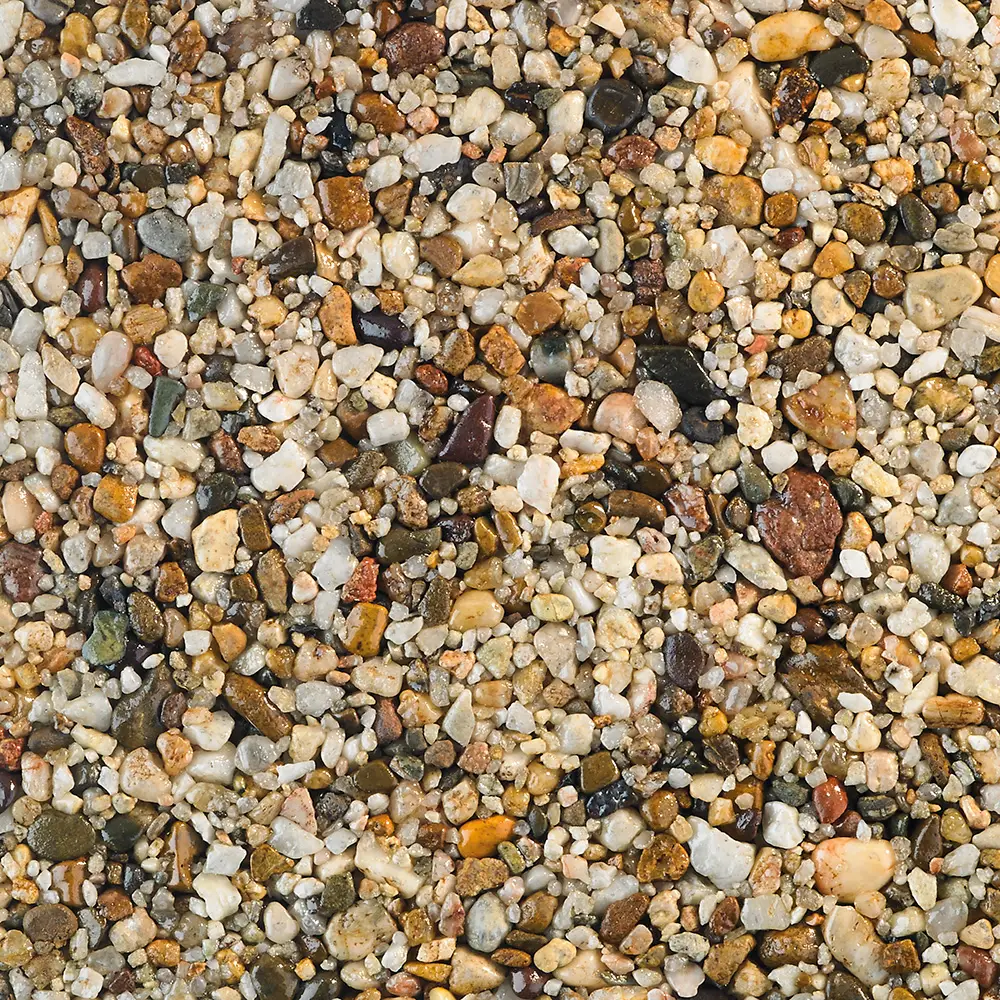
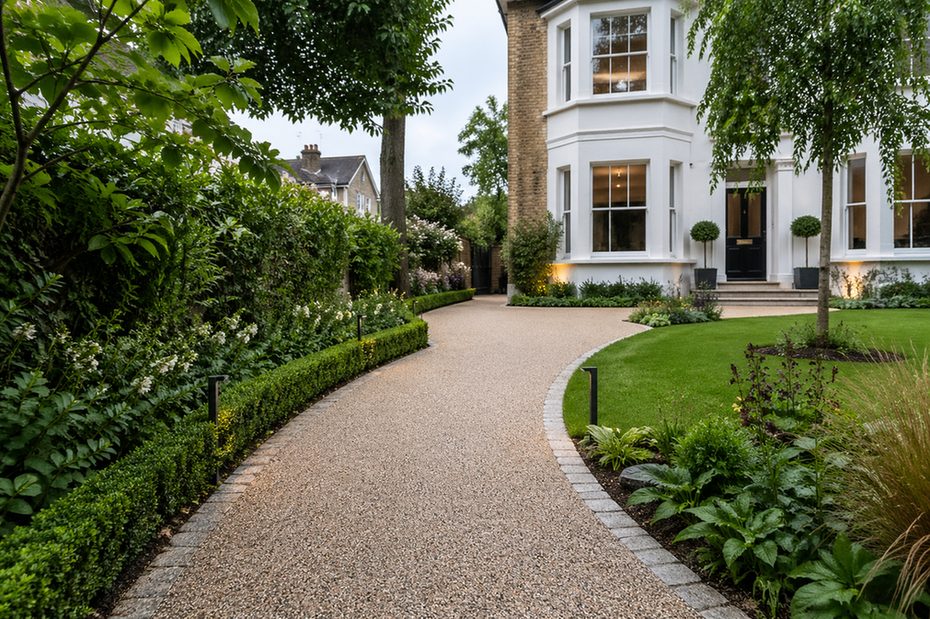
A warm natural blend sitting comfortably against London stock brick — the result of matching undertones, not just picking a favourite colour.
Warm or cool: the undertone decision
Most colour regrets are undertone clashes rather than wrong colours. London stock brick is warm. Most modern render and aluminium joinery is cool. Hold a white sheet of paper against your brickwork: if the brick looks yellow or orange beside it, you have warm masonry and warm naturals will sit comfortably; if it reads pink-red or brown-grey, mid greys and earthy tones usually work better than golden buffs.
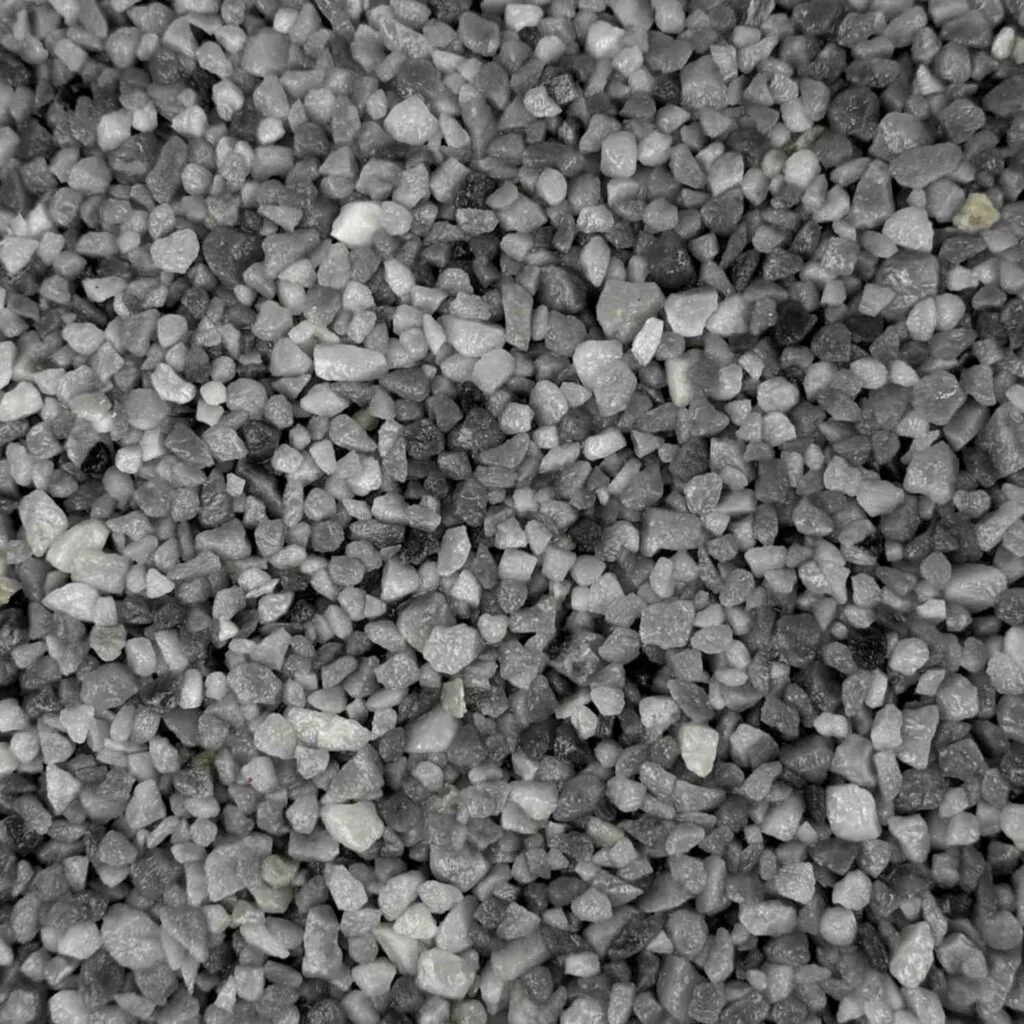
When in doubt, mid grey is the diplomatic answer. It is why our cool grey family is thirteen blends deep.
Light, dark, or in between
- Light blends (whites, pale coastals) lift dark frontages and make small drives feel larger. They show soil, leaves and tyre marks soonest, and suit drives that get swept regularly.
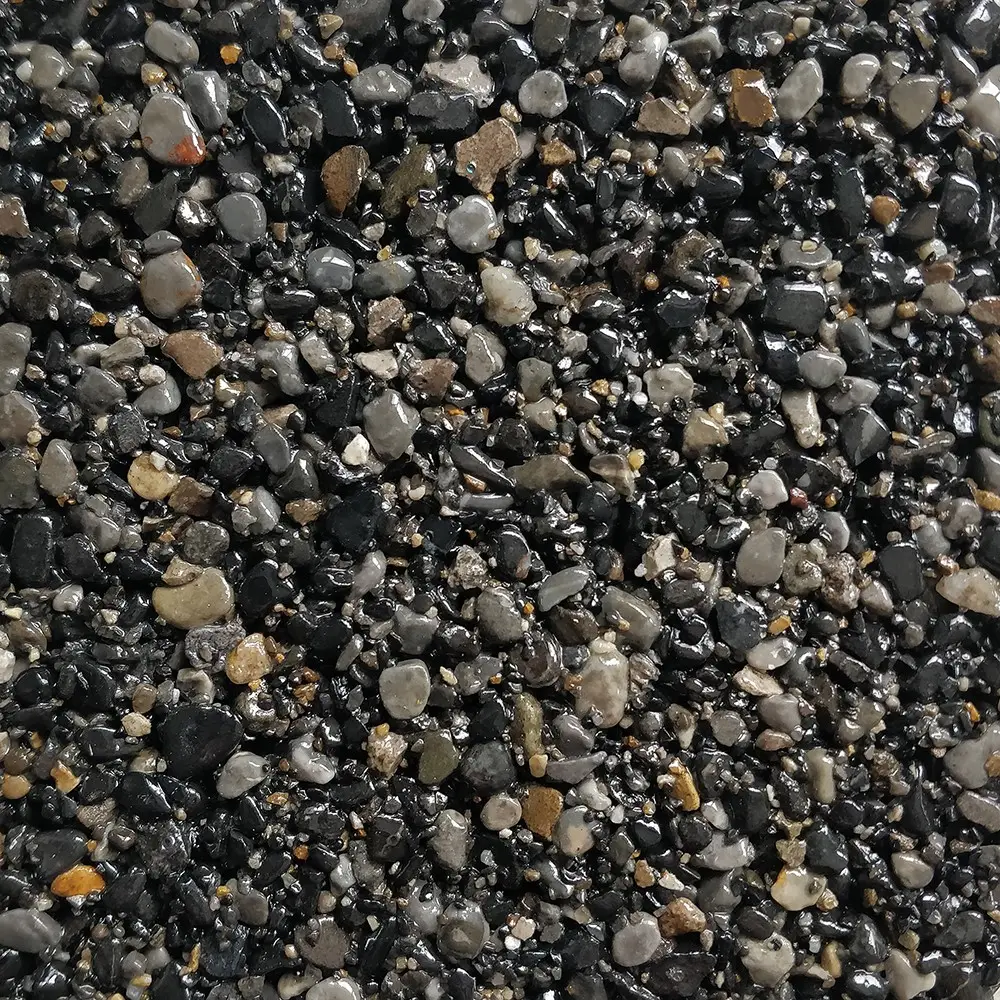
- Dark blends (Anthracite, Dark Grey) look sharp against crisp modern architecture and hide oil and tyre marks well, but show dust, pollen and dried water marks.
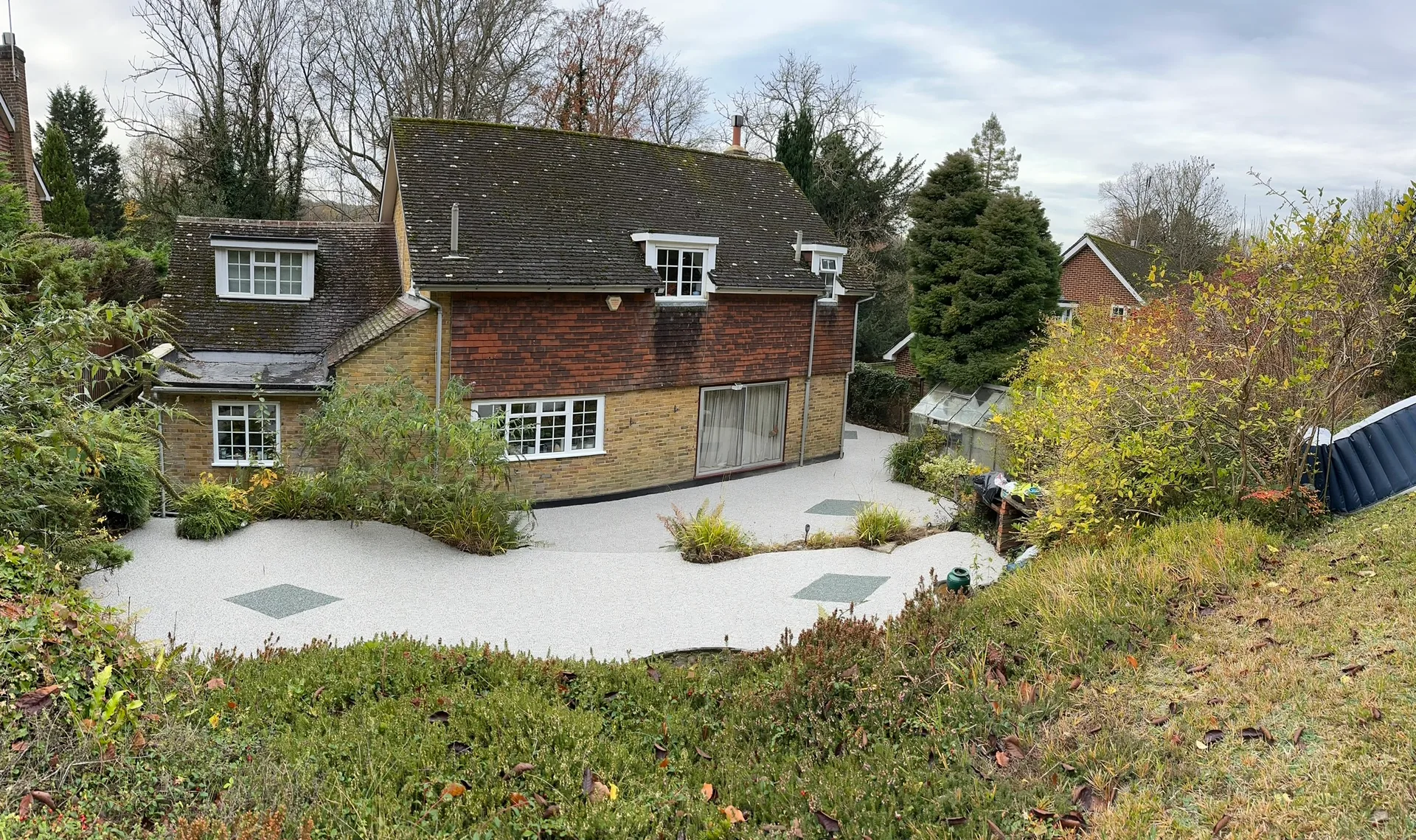
- Mid-tone flecked blends hide everyday traffic best, because the natural variation in the stone breaks up marks before your eye finds them. For a working family drive this is the practical sweet spot, and it is where most of our installations land.
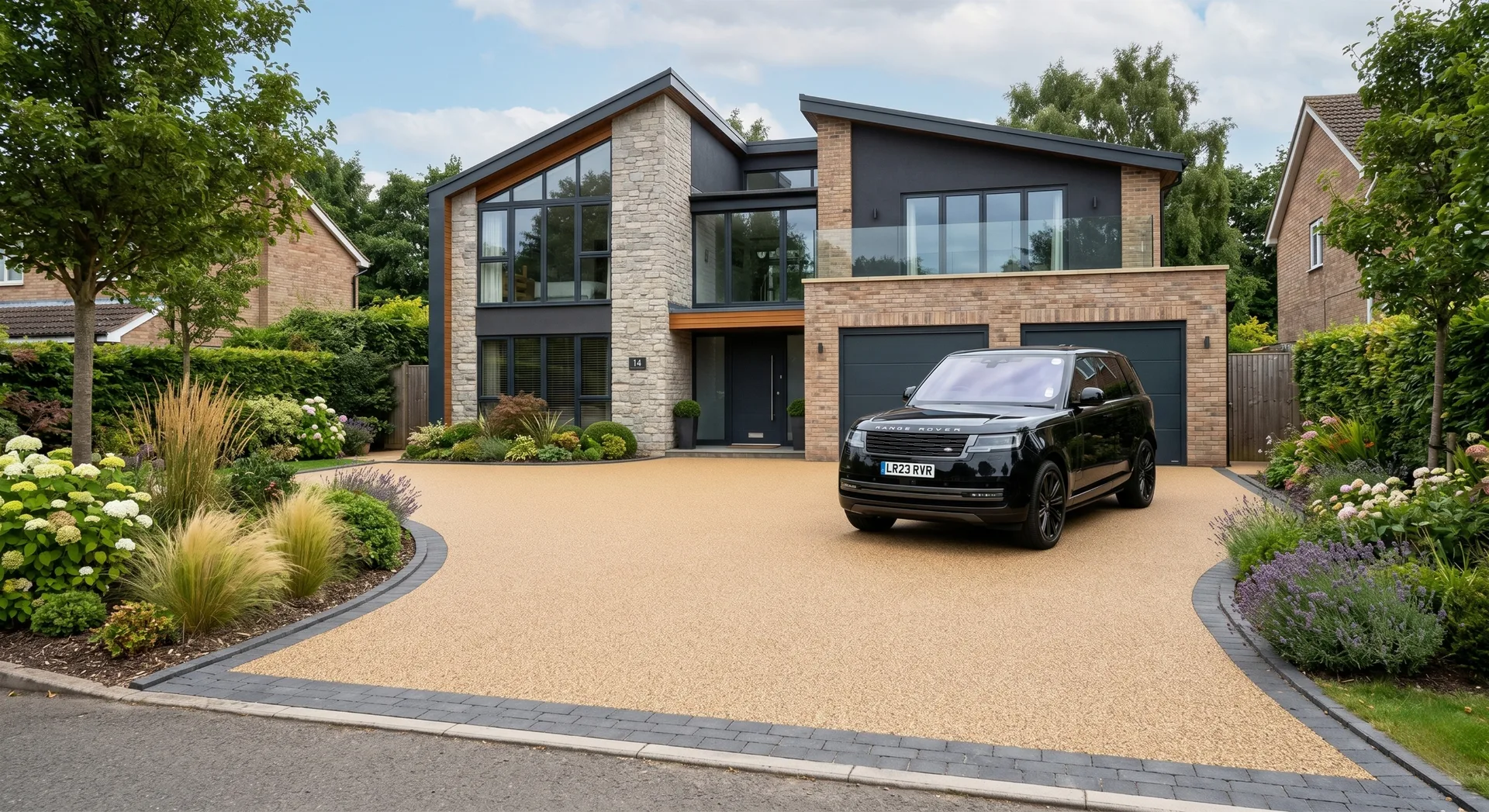
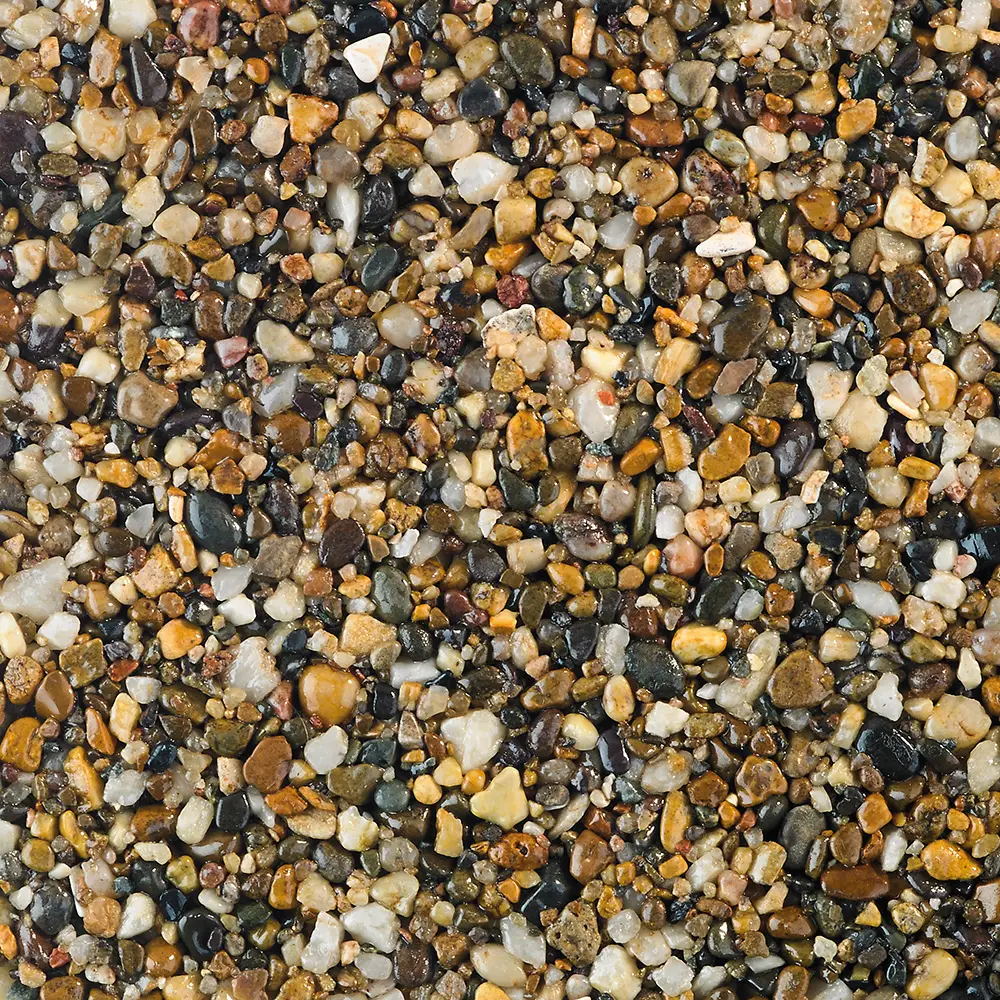
A mid-tone flecked blend: grippy, smart and forgiving on everyday marks — the practical choice for most London homes.
Borders and details earn their money
A border in a contrasting blend — light field with a dark edge being the classic — does three jobs: it frames the drive the way a picture frame finishes a print, it defines the boundary against lawn or path, and it takes the edge wear and tyre scrub on the tone that hides it best.
Why you must see physical samples
Screens lie. The same aggregate photographs differently in morning and afternoon light, every monitor renders it differently again, and a 10cm swatch reads differently to 50 square metres of it. Natural stone also varies slightly batch to batch because it is, in fact, natural.
So: shortlist from the online library, then judge the final decision only on physical sample boards, outdoors, against your own brickwork, ideally checked in both morning and afternoon light. We bring sample boards to every free site visit for exactly this reason, and we would rather you take a day deciding than rush the one choice on the project that cannot be tweaked later.
Narrow it in one visit
Tell us the property type and we will arrive with the right six boards rather than all 59. You hold them against the brick, we give an honest opinion, you decide in your own light. Free site visit, written quote within 48 hours, samples included. Call now for a quote, or request sample boards through the contact page.
Related guides: Browse all 59 colours · Resin driveway cost in London · Resin bound driveways
.jpg)