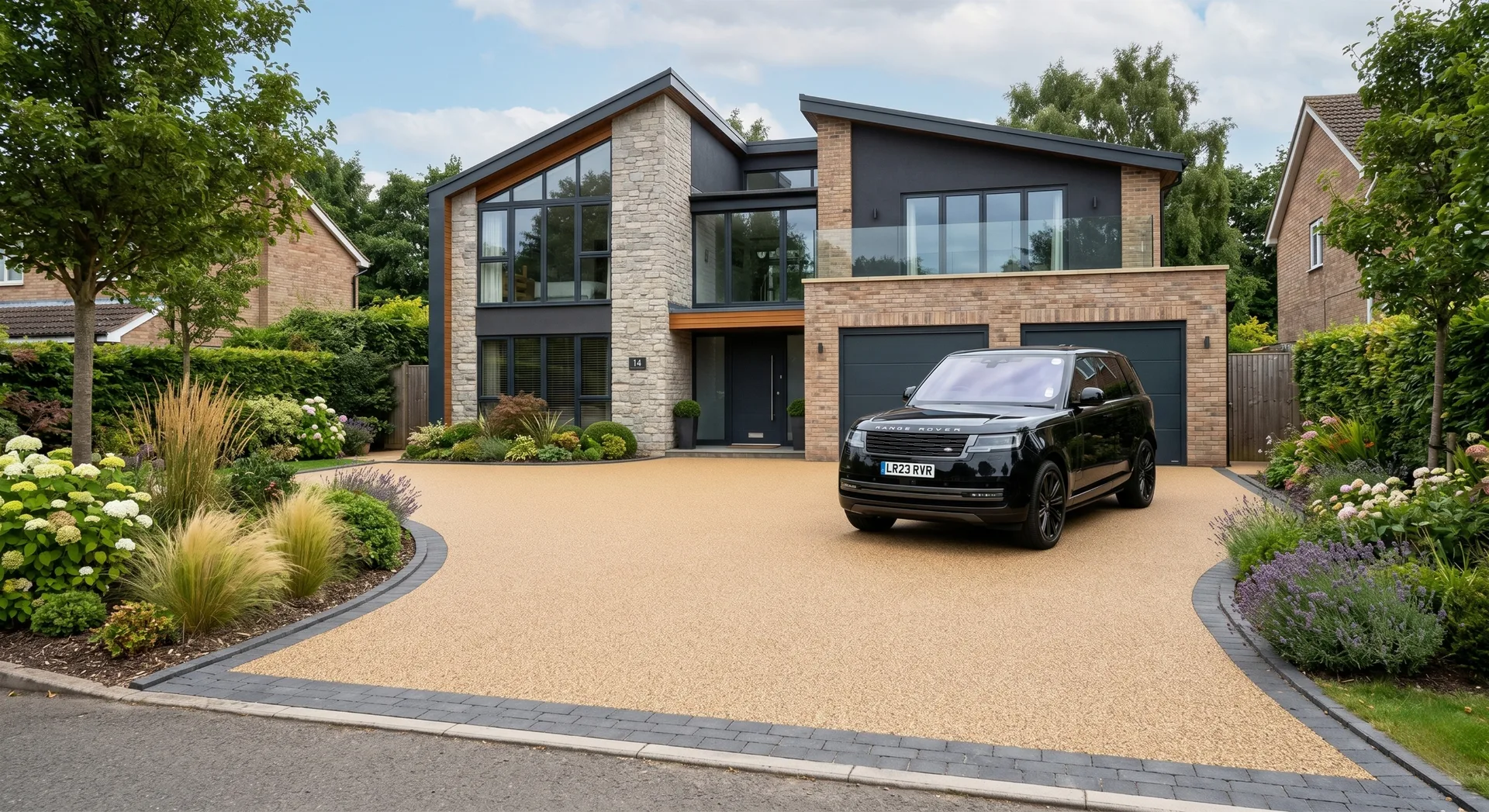
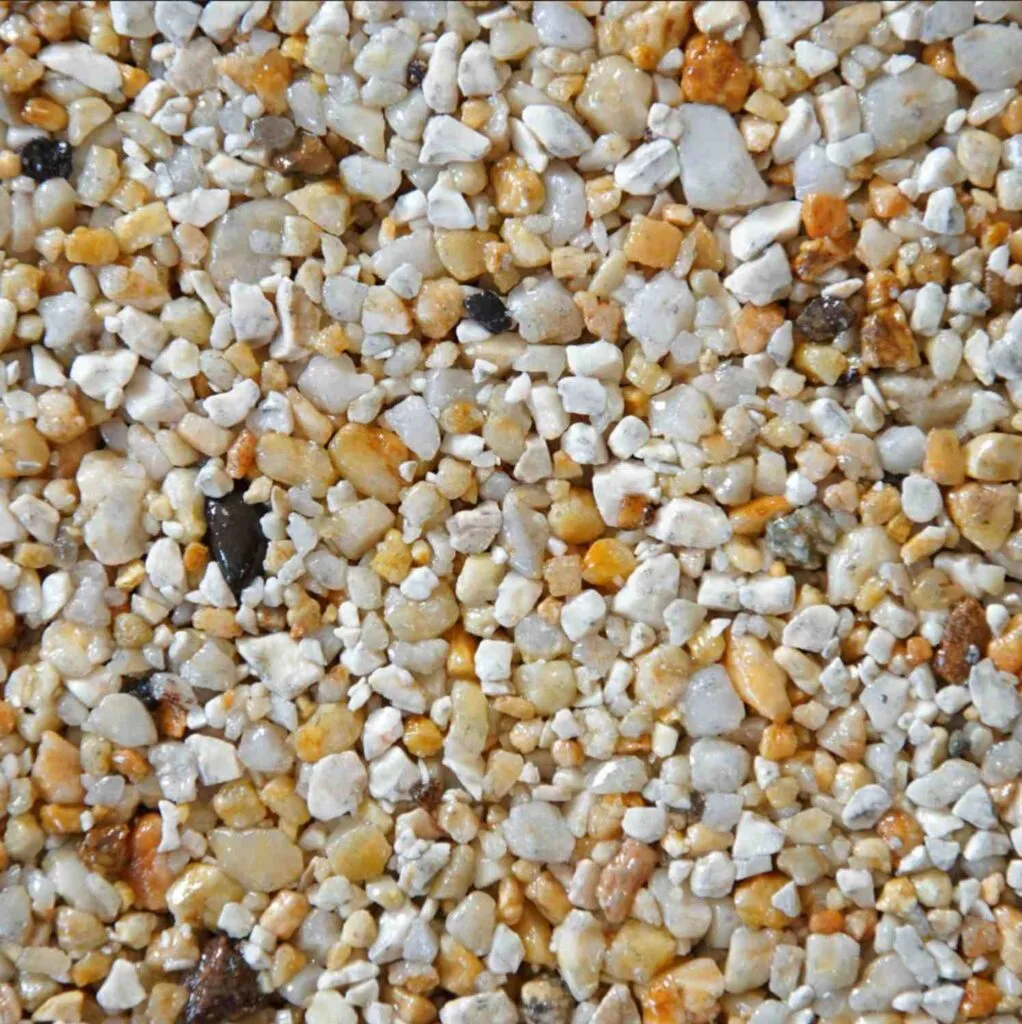
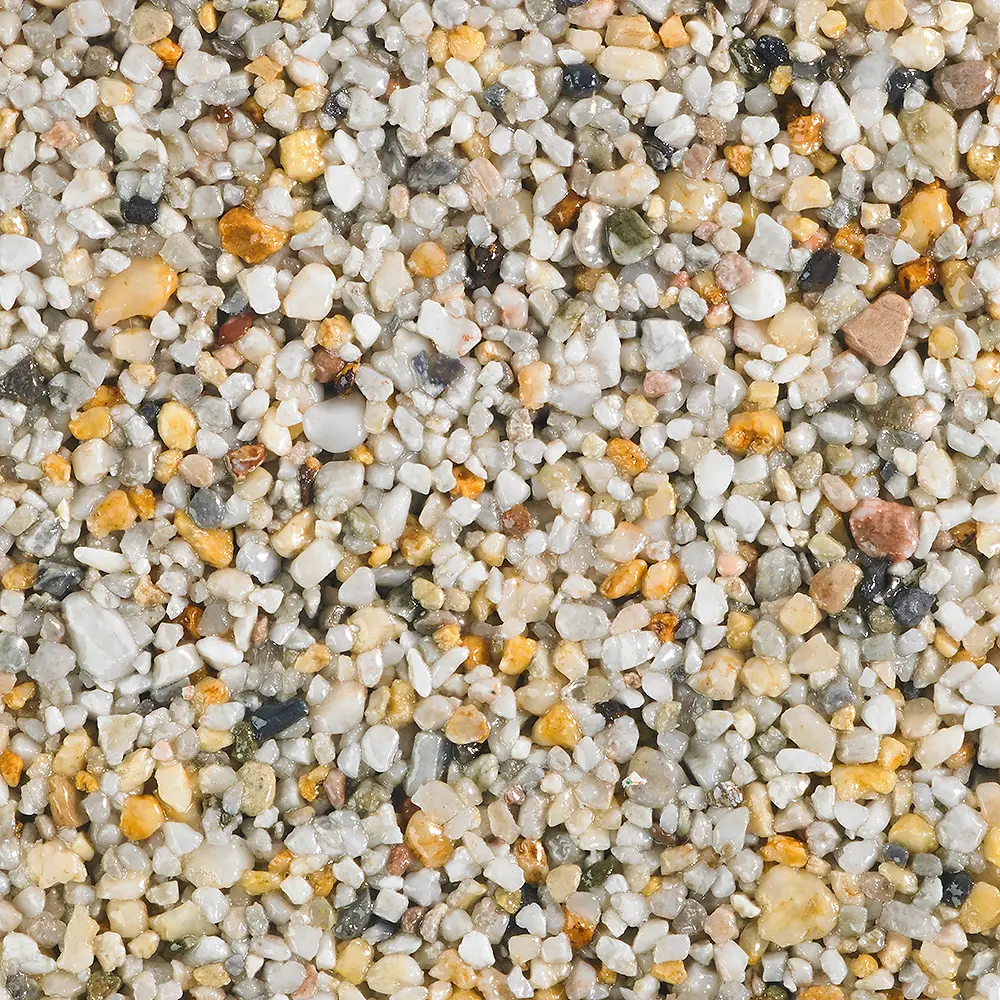
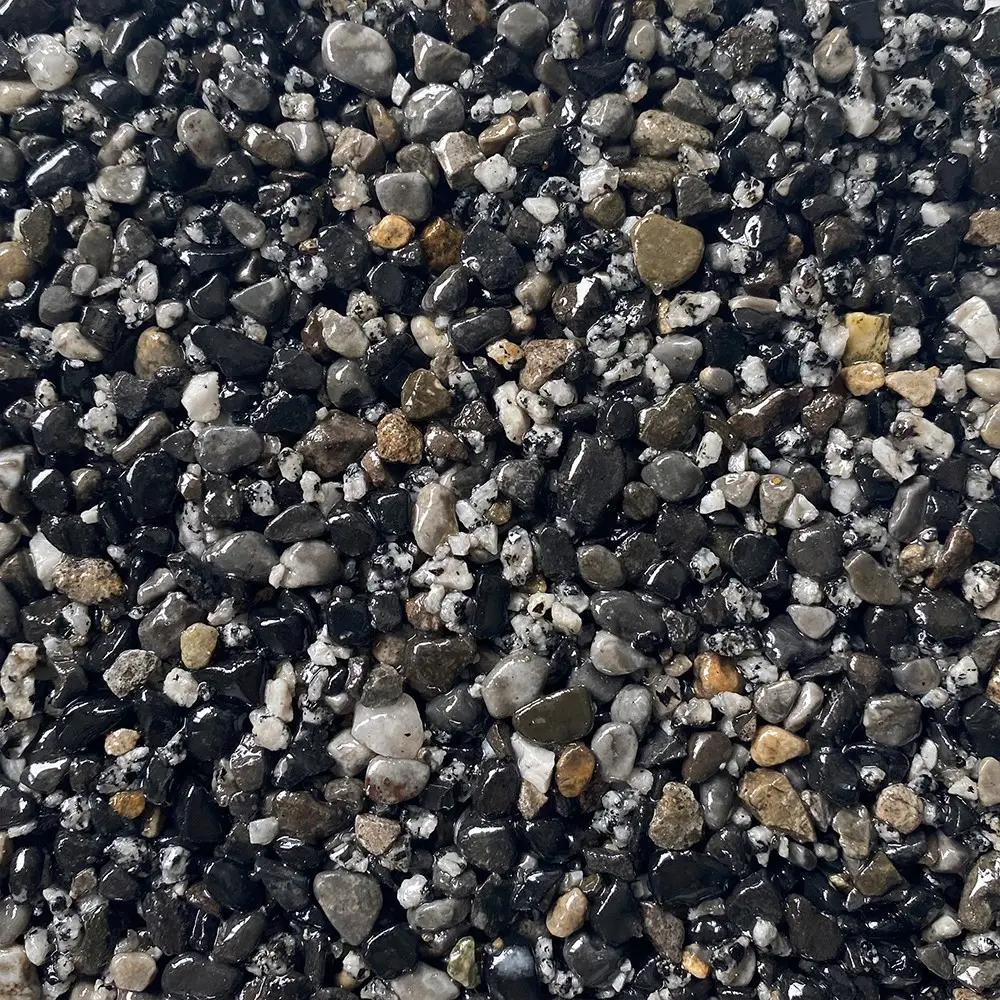

Yes, resin bound surfacing can be laid directly over existing concrete and tarmac, and sometimes over block paving, provided the existing surface is sound. A good overlay skips excavation and a new sub-base, which saves £25 to £50 per square metre. On a typical two car London drive that is £1,250 to £2,500 off the price. The catch is the word sound, because an overlay on a failing base fails with it, and faster than you would think.
Here is how each surface stacks up as an overlay candidate, and how to assess your own drive before anyone quotes you.
Concrete: the best overlay base, when it behaves
A sound concrete slab is the ideal overlay base. It is rigid, flat and already compacted by years of use. Preparation involves cleaning, treating any minor cracks, managing expansion joints and priming so the resin keys properly.
When concrete is not suitable: live cracks that have moved (look for one side sitting higher than the other), slabs rocking on washed-out ground, or widespread surface breakdown. Resin bound is around 16mm thick and copies every movement beneath it. A moving crack reappears in the resin within a winter or two, and that failure sits outside most guarantees, ours included, which is exactly why we will not overlay a slab we do not trust.
Tarmac: usually fine, edges tell the truth
Sound tarmac takes resin well after cleaning and priming. The inspection points are the edges and any patches. Tarmac that is crumbling at the boundaries, rutted in the wheel tracks or soft enough to dent in summer heat is past overlaying. Surface-level cracking can sometimes be treated; structural rutting cannot.
Block paving: possible, but we are the cautious ones here
Blocks are the trickiest overlay because they are dozens of small units that can each move independently. For an overlay to work, every block needs to be stable, level and tightly jointed, and the joints still need filling or the resin bridges hollow gaps. A drive with sunken patches near the gate or rocking blocks by the drainage channel is telling you the bedding layer underneath has already failed.
Honest answer: on a fair number of block drives we recommend lifting the blocks and building a proper open grade base instead. It costs more upfront and removes the most common cause of overlay failure. When the blocks are genuinely solid, an overlay is fine and we will happily say so.
The drainage point most overlay quotes skip
Resin bound is a permeable surface, but concrete and tarmac are not. Lay permeable resin over an impermeable slab and the water passes through the resin, hits the slab, and goes wherever the slab’s falls send it. That is workable when the existing falls and drainage are good. It is a problem when they are not, and it also means an overlaid drive is not a fully permeable SuDS system in the way a full-build resin drive is.
We check falls and drainage at the site visit and will specify ACO channels or drainage adjustments where needed. Any quote that talks about permeability while overlaying an old concrete slab without mentioning falls is glossing over the physics. The wider rules are covered in our planning permission guide.
Check your own drive in five minutes
Walk your driveway and look for:
- Cracks where one side sits higher than the other (movement, bad)
- Hollow sounds when you tap the slab with a broom handle (voids underneath, bad)
- Crumbling edges or potholes in tarmac (perished, bad)
- Blocks that rock underfoot or have sunk near drains and gates (failed bedding, bad)
- Hairline surface cracks with no height difference (usually treatable, fine)
- Standing water marks showing where puddles form (drainage to plan around)
None of this replaces a proper assessment, but it tells you which conversation you are about to have.
The fastest way to find out: send us photos
This is the one driveway question we can usually give a first opinion on remotely. Take three or four photos of your drive, including any cracks or sunken areas close up, and send them over WhatsApp. We will tell you straight whether it looks like an overlay candidate or a dig-out, and roughly what each route costs using the bands in our London cost guide.
If it looks promising, we confirm with a free site visit and a written quote within 48 hours. Call now for a quote.
Related guides: Resin driveway cost in London · Why resin driveways fail · Resin bound driveways